
This project is an interactive classroom workshop that utilizes stop-motion animation to teach students the fundamentals of biomechanics and human movement.
Project Brief
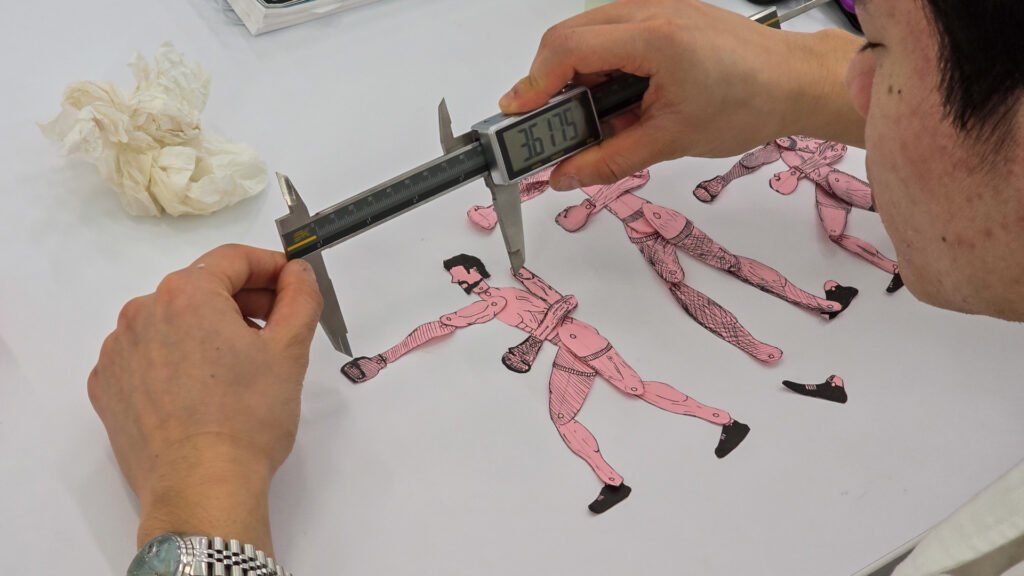
Instead of learning human mechanics through illustrations and diagrams, learners will build a “Rig” based on Anthropometrics (the science of human measurement) and Kinematics (the geometry of motion). By physically constructing a jointed paper puppet, you will discover the mechanical limits of the human body and learn how to visualize the differences in interactions between different shapes and sizes of human bodies.
Good design shouldn’t just work for the “average” person; it must work for the extremes. In this project, you will use the anthropometric data collected from our own class to build three distinct paper puppets. By animating these puppets side-by-side, you will witness how a workspace/tool that is comfortable for a 50th-percentile user can become a “physical barrier” for those in the 5th or 95th percentiles. You are transitioning from designing for “yourself” to designing for a diverse population.

Step 01:
In pairs, learners will use measuring tools to create a data pool of anthropometric measurements and converting these using a 1:10 scale factor to cut cardstock for each body part.
Step 02:
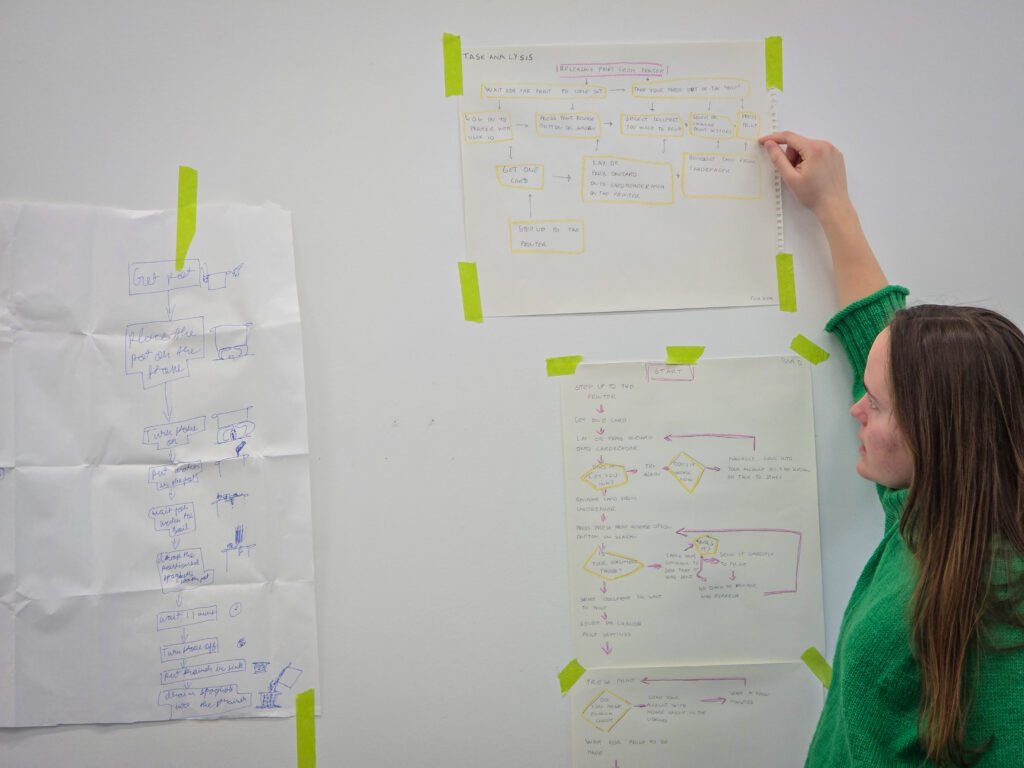
Learners will then think of a simple everyday task to perform a task analysis on, breaking down the action into its core movement to understand its mechanical logic.
Step 03:
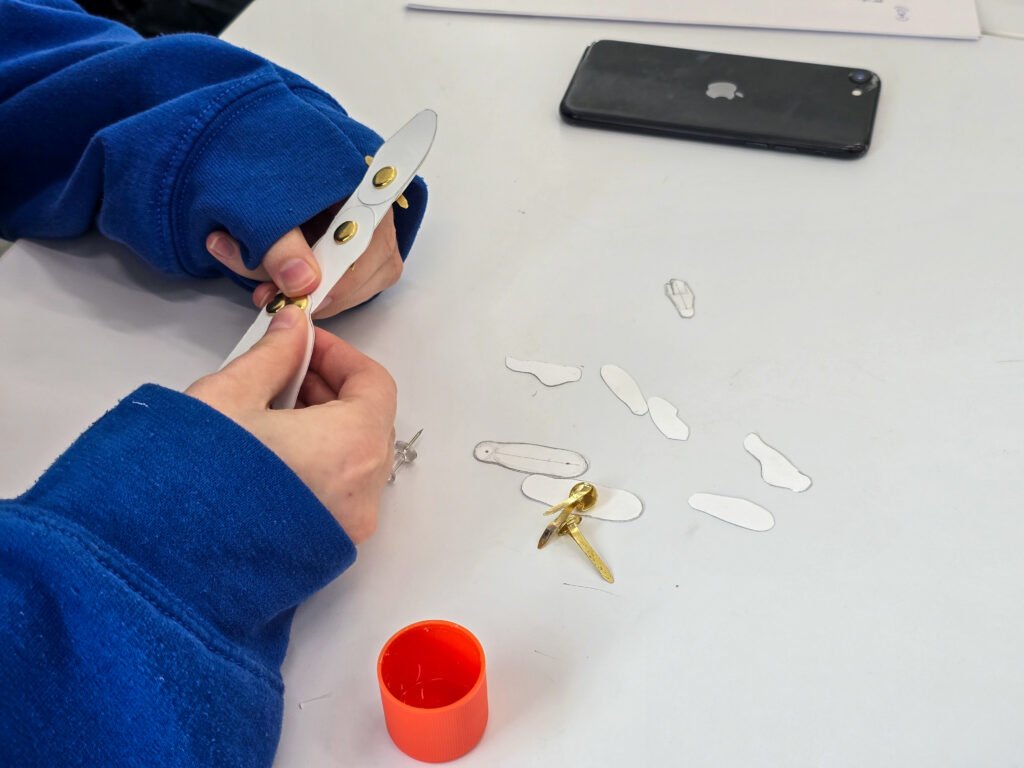
Map out the specific anatomical actions required at each joint (represented by a paper fastener). Consider how one movement forces a reaction in another part of the body.
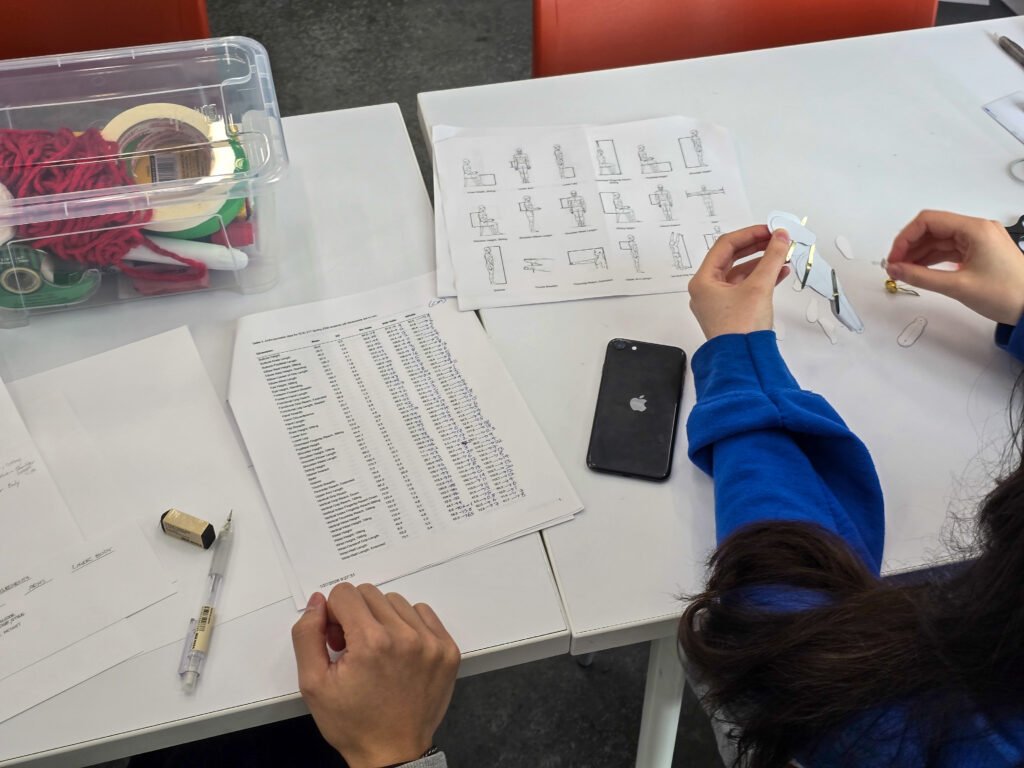

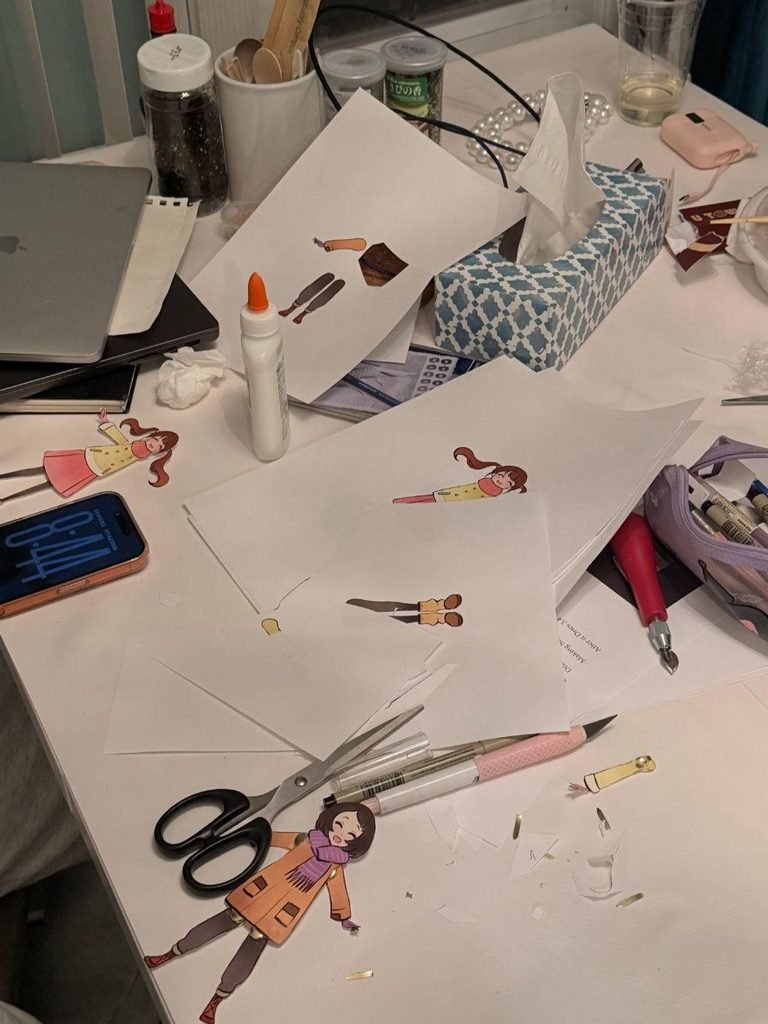
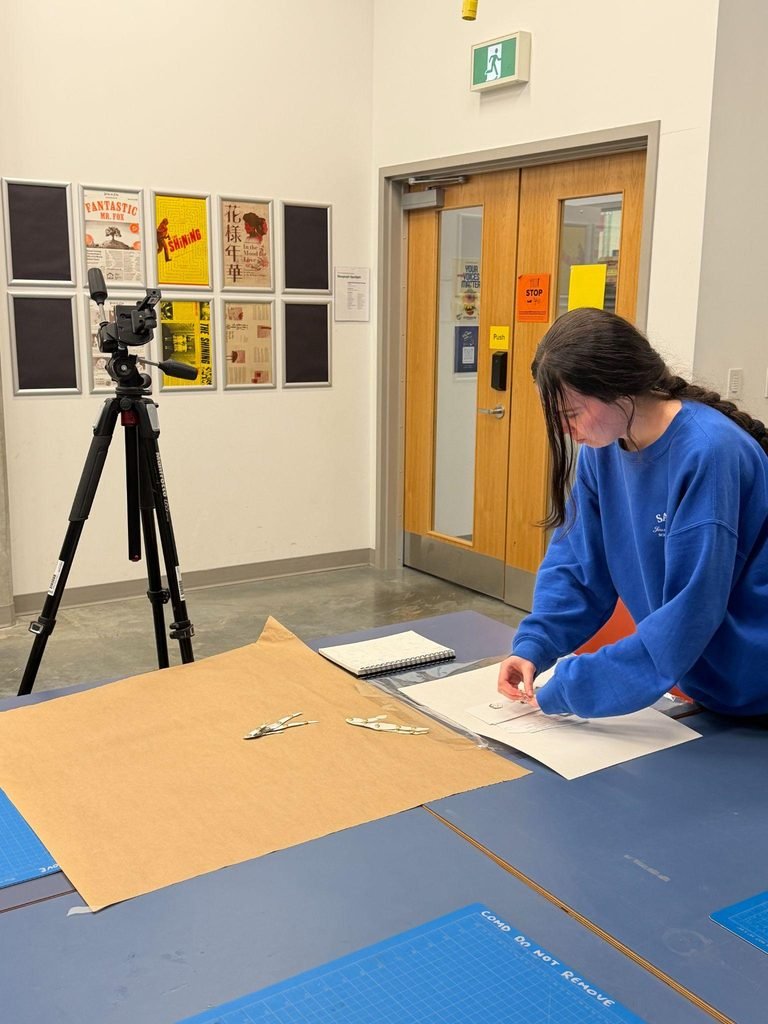
Students were then asked to prepare a written reflection of how they have analyzed their chosen action and how the stop-motion activity helped in understanding biomechanics and the human body more.