Nimble Animation Stand
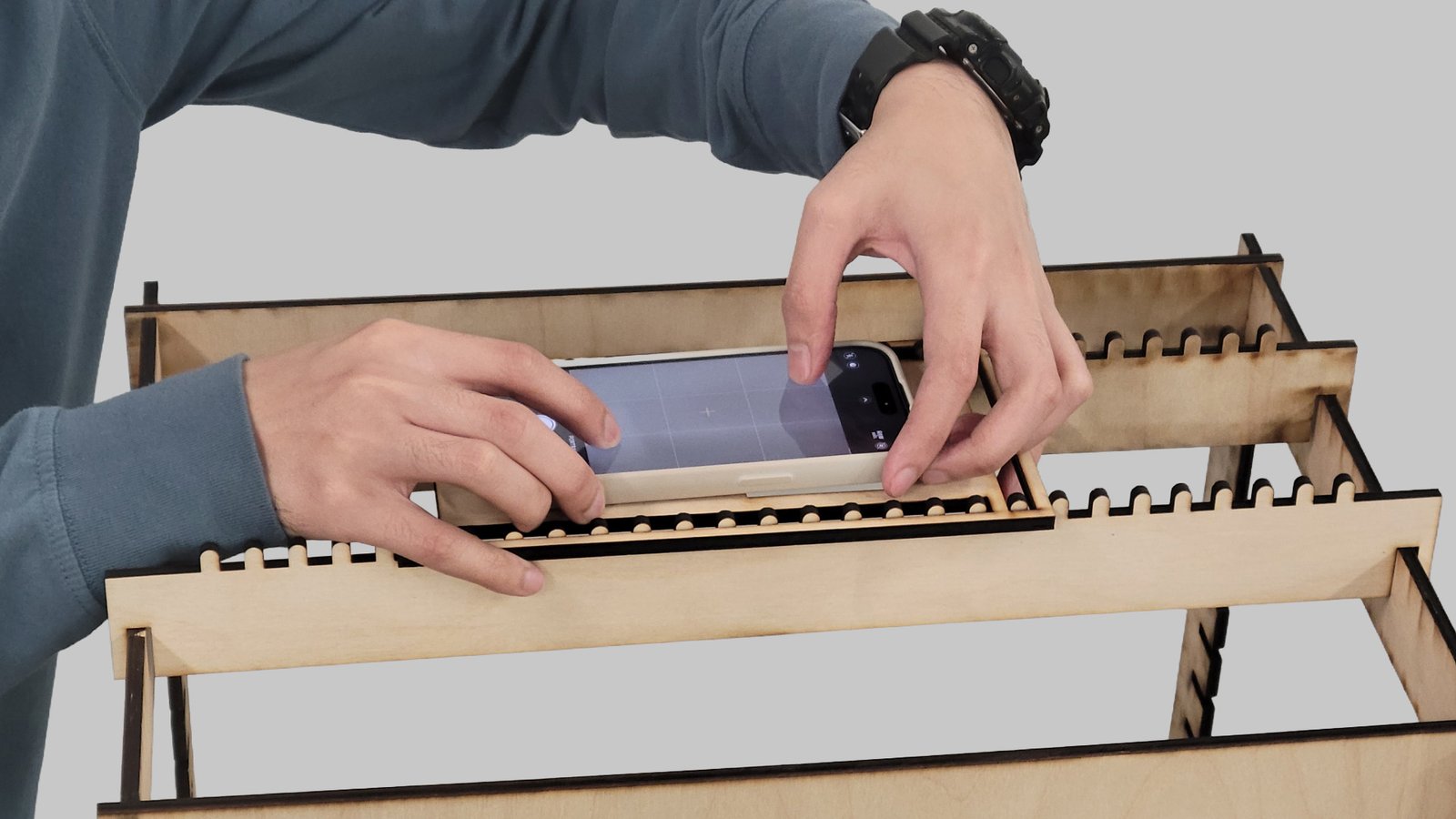
This project with the Animate Materials Workshop called for designing, testing, and fabricating a portable multiplane animation stand for artists with any level of animation experience to create temporary animation setups in a variety of locations, being ideal for artists and students who don't have a dedicated studio space or those who want to try fieldwork animation outdoors.
"How might we design an easy-to-assemble, modular, and portable multiplane animation stand that requires minimal hardware, reducing the cost and complexity barrier to entry for independent animators to expand the possibilities for mobile and non-traditional stop-motion and material animation?"
Background
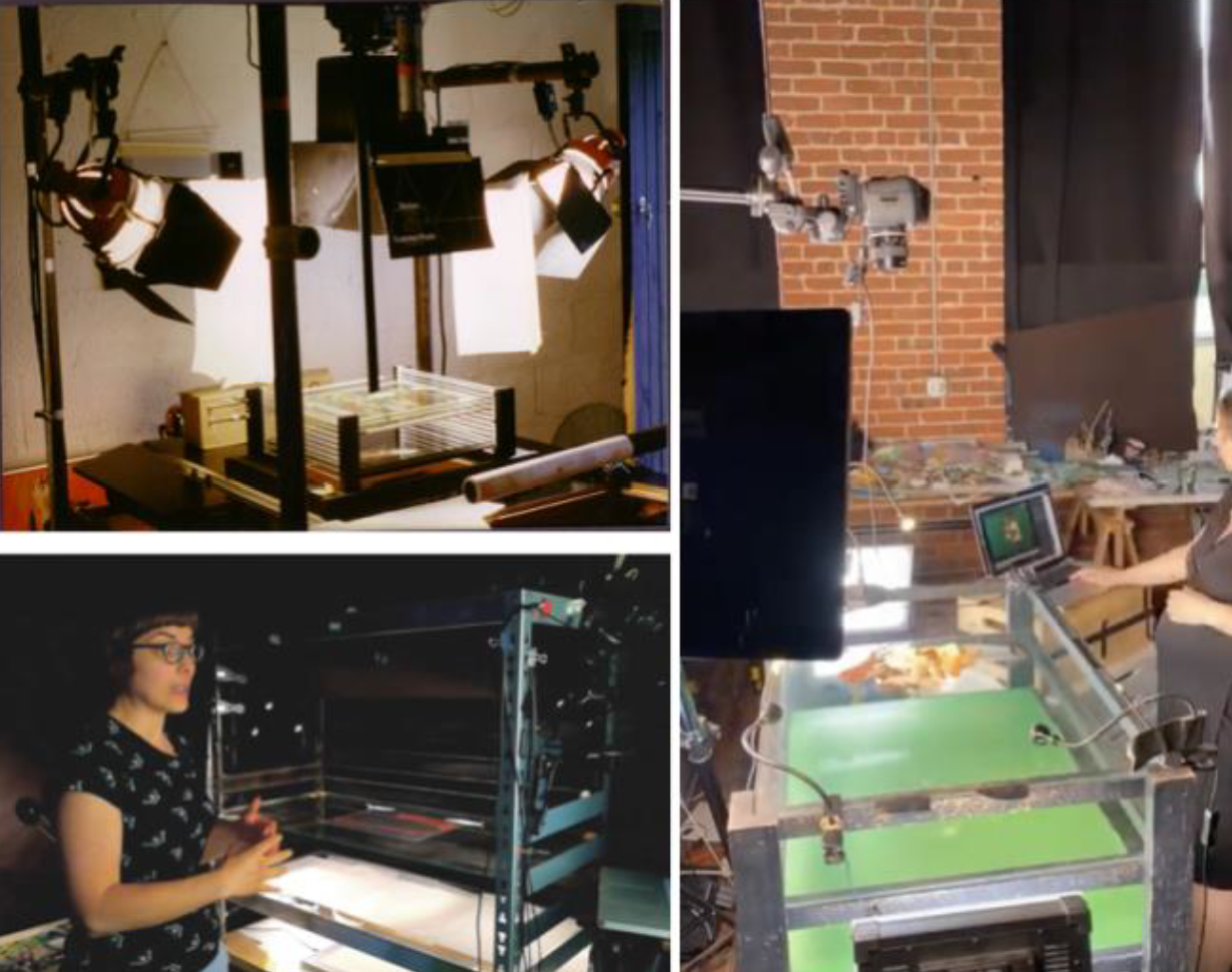
Traditional under-the-camera animation stands are large, expensive, and difficult to move. DIY solutions, while more accessible, are often bulky, rigid, and hard to disassemble or reconfigure.
To make multiplane animation more accessible and mobile, the Animate Materials Workshop developed the nimble multiplane—an open-access prototype that can be built in a local digital fabrication lab or makerspace.
The Challenge
To design an accessible, user-friendly, and modular multiplane animation stand that can be manufactured in a local makerspace, offering artists an easy-to-assemble, highly portable setup for both studio and outdoor shooting, thus lowering the barrier to entry for multiplane animation.
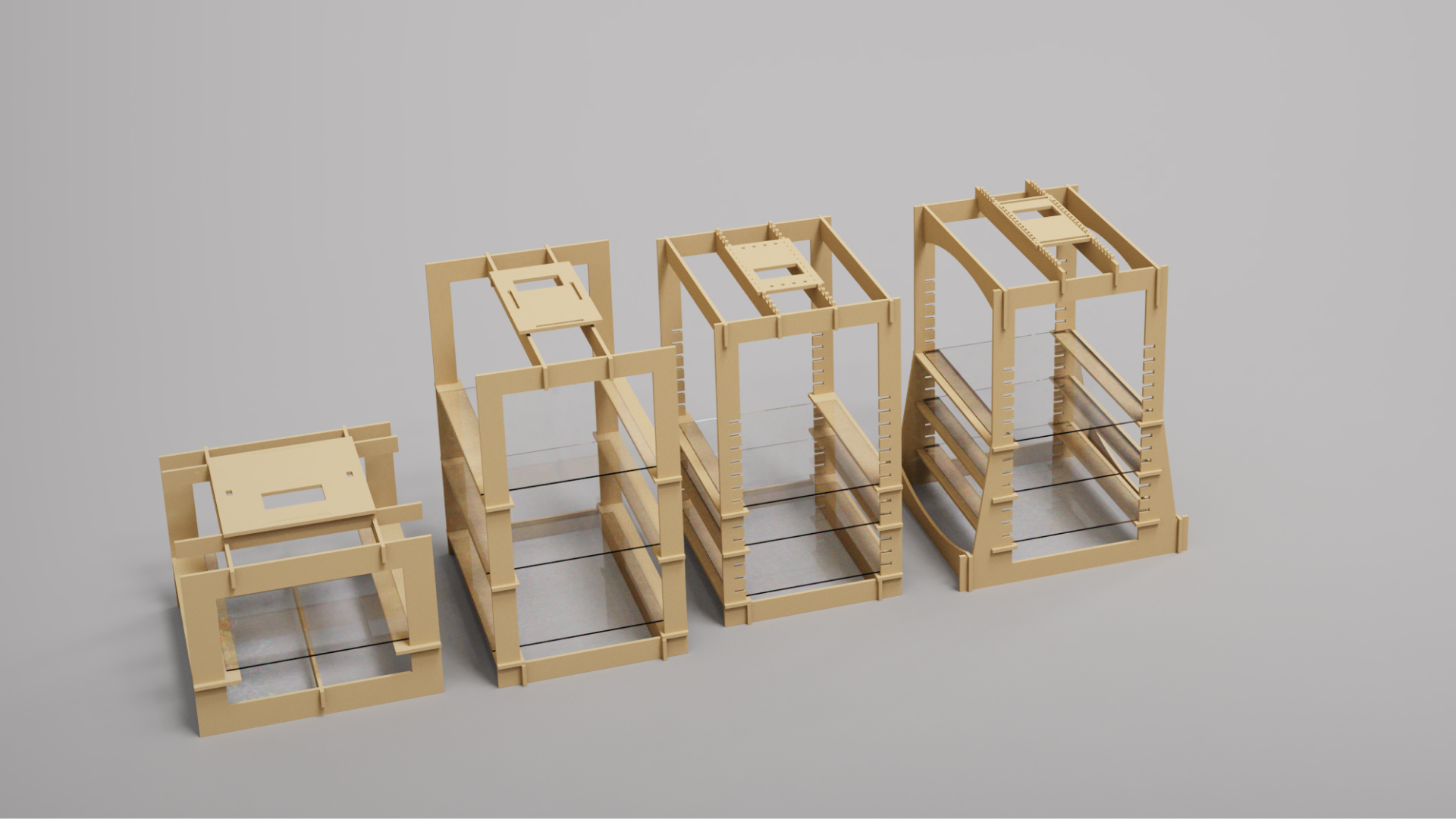
Cardboard and wooden prototypes were developed through iterative laser cutting, assembly, and testing.
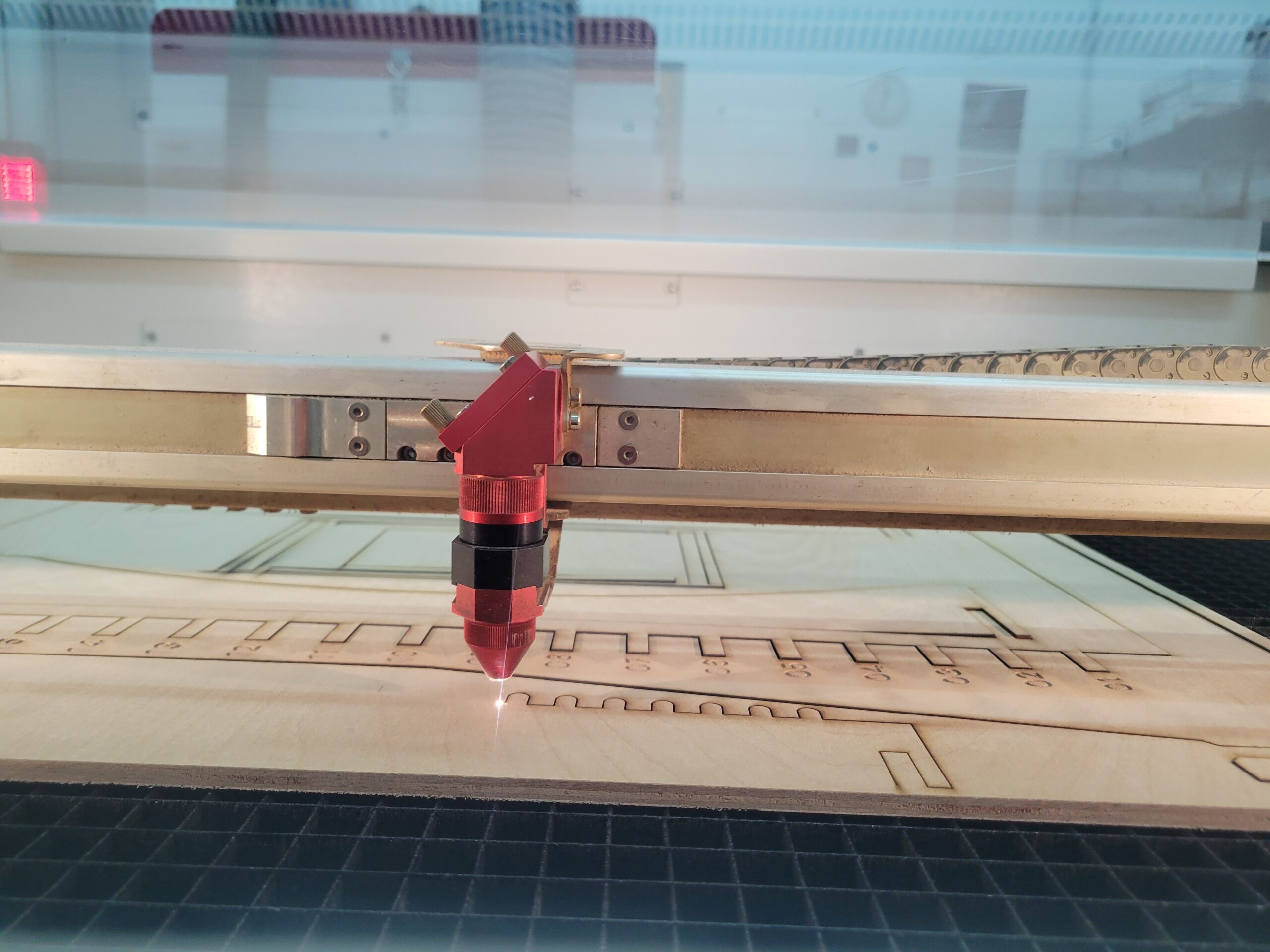
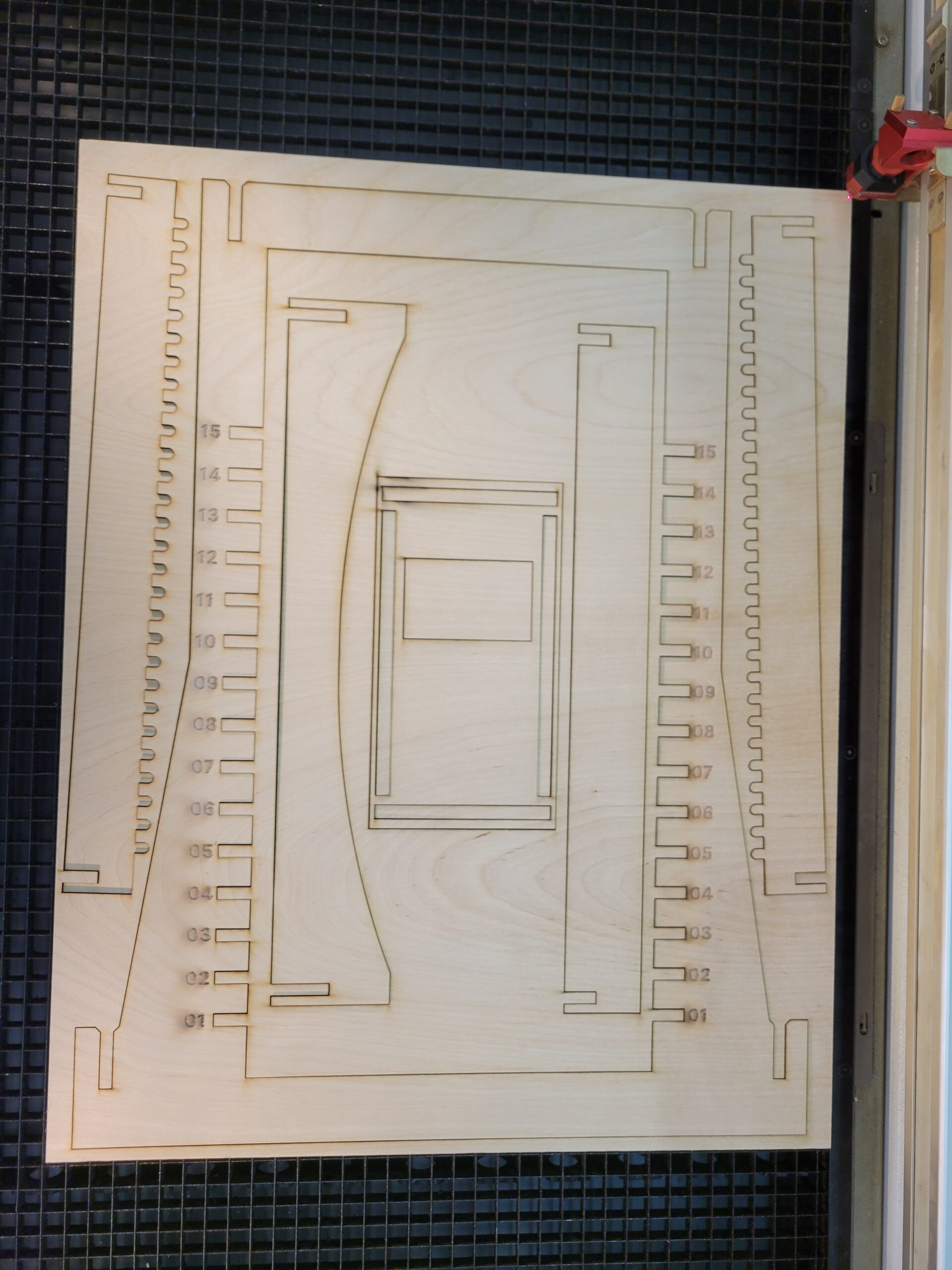
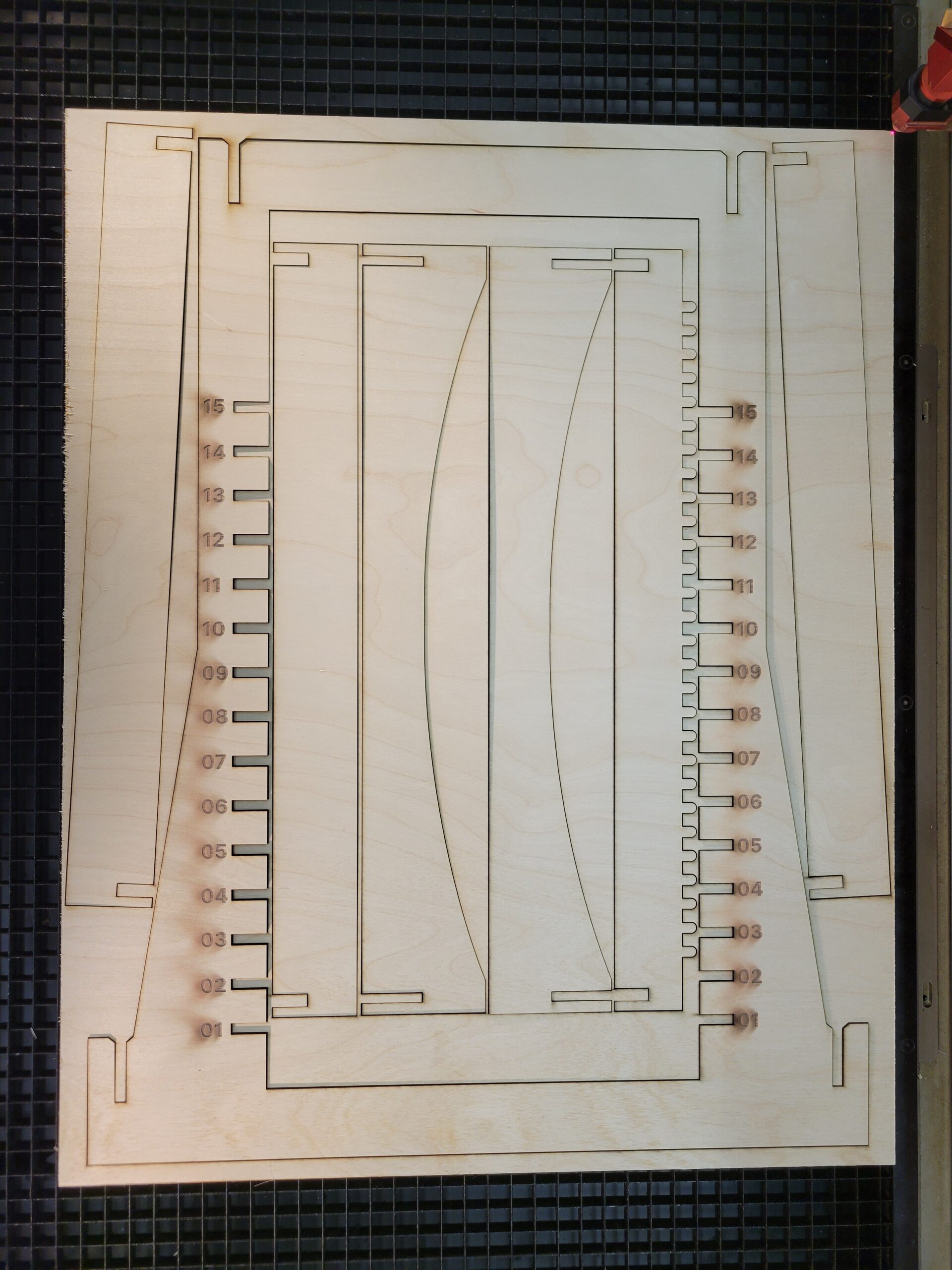
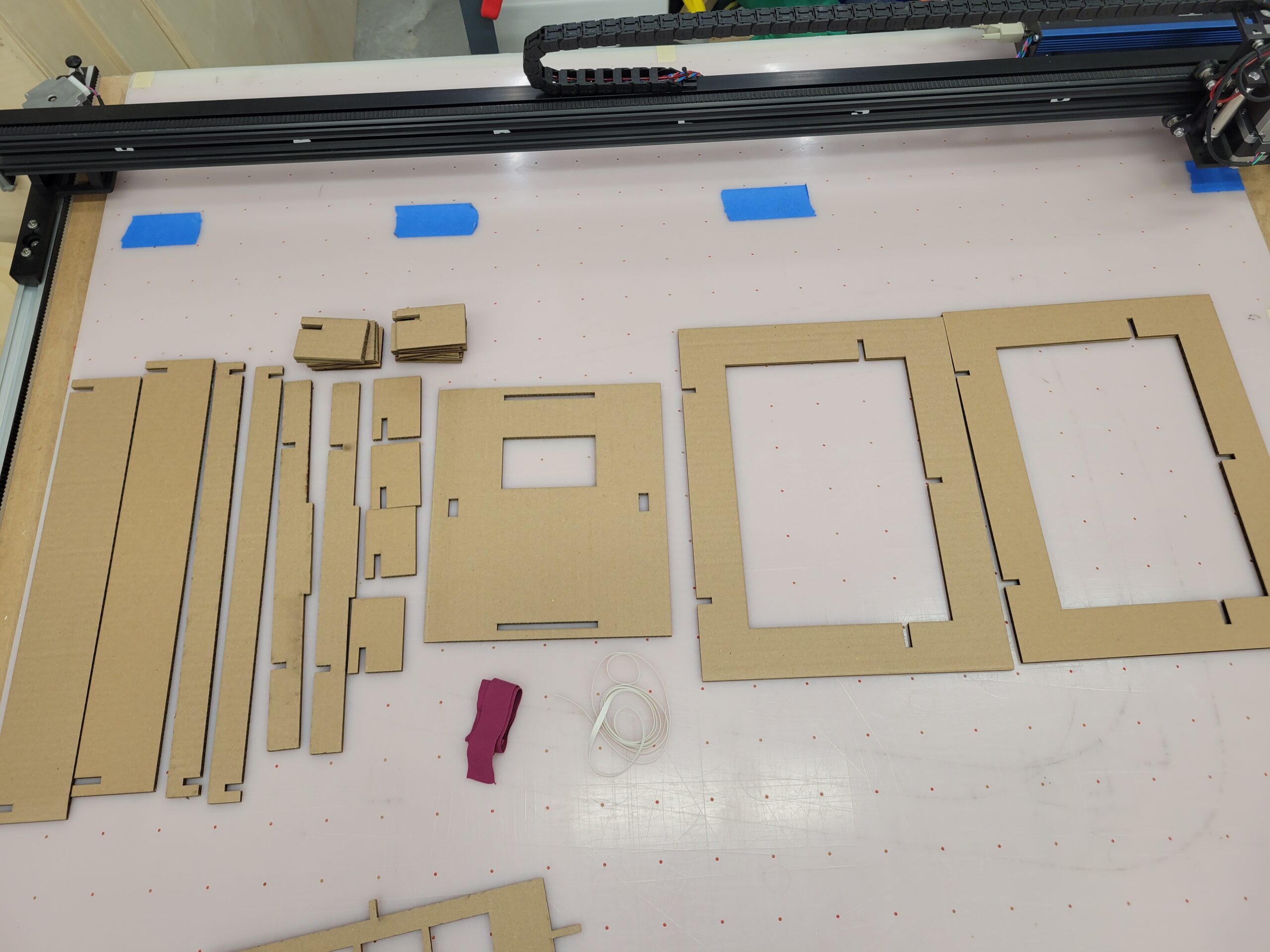
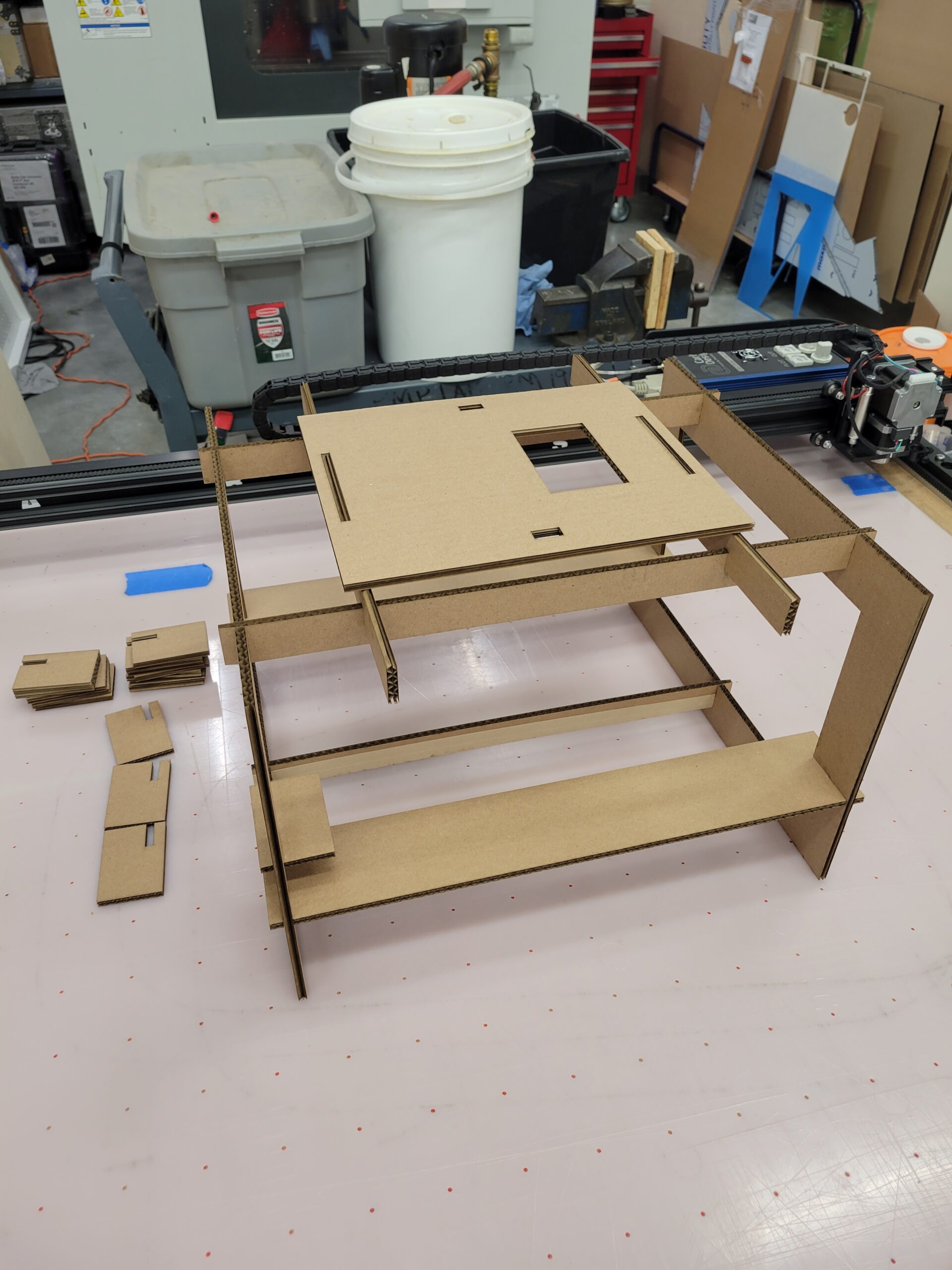
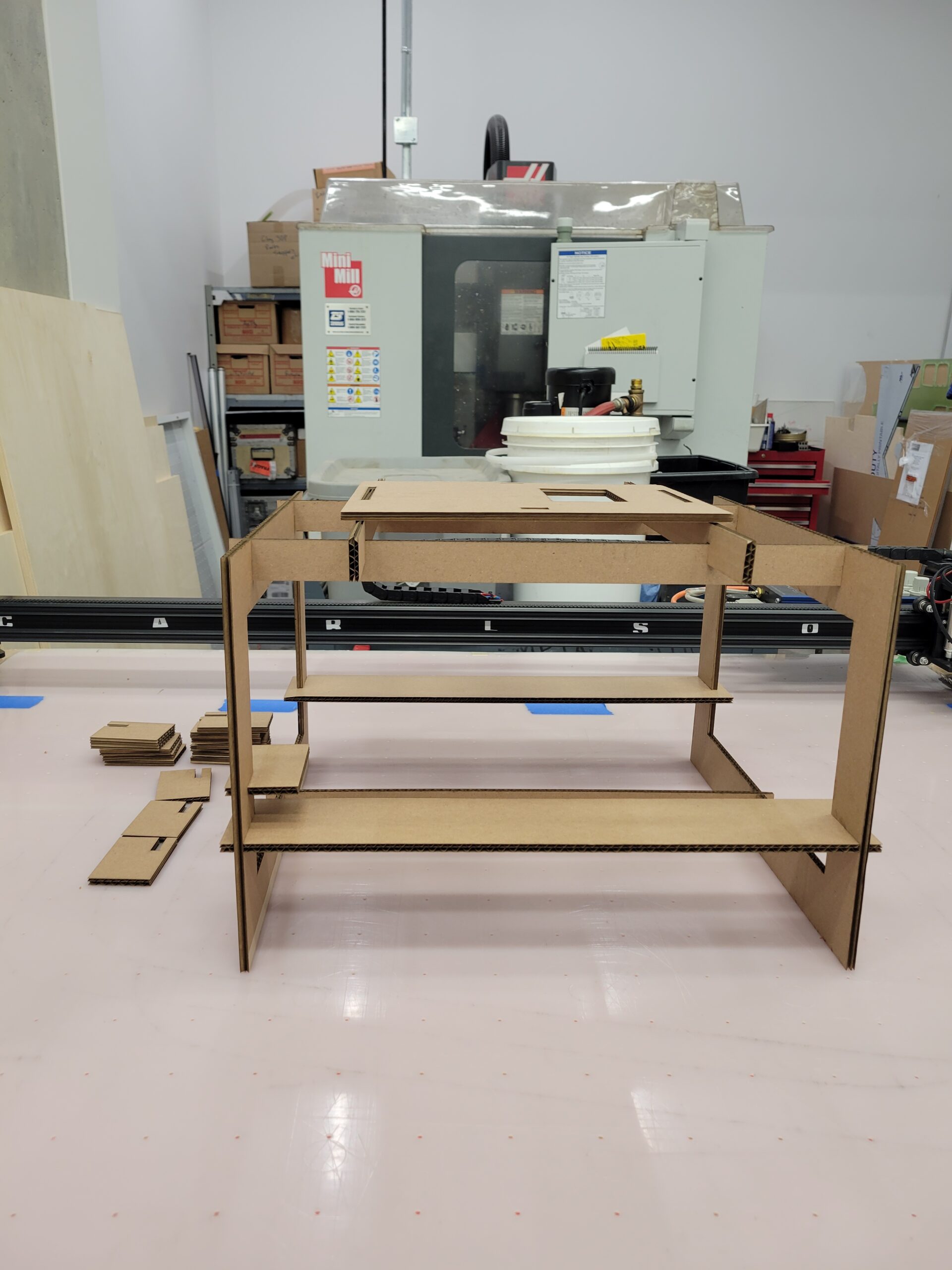
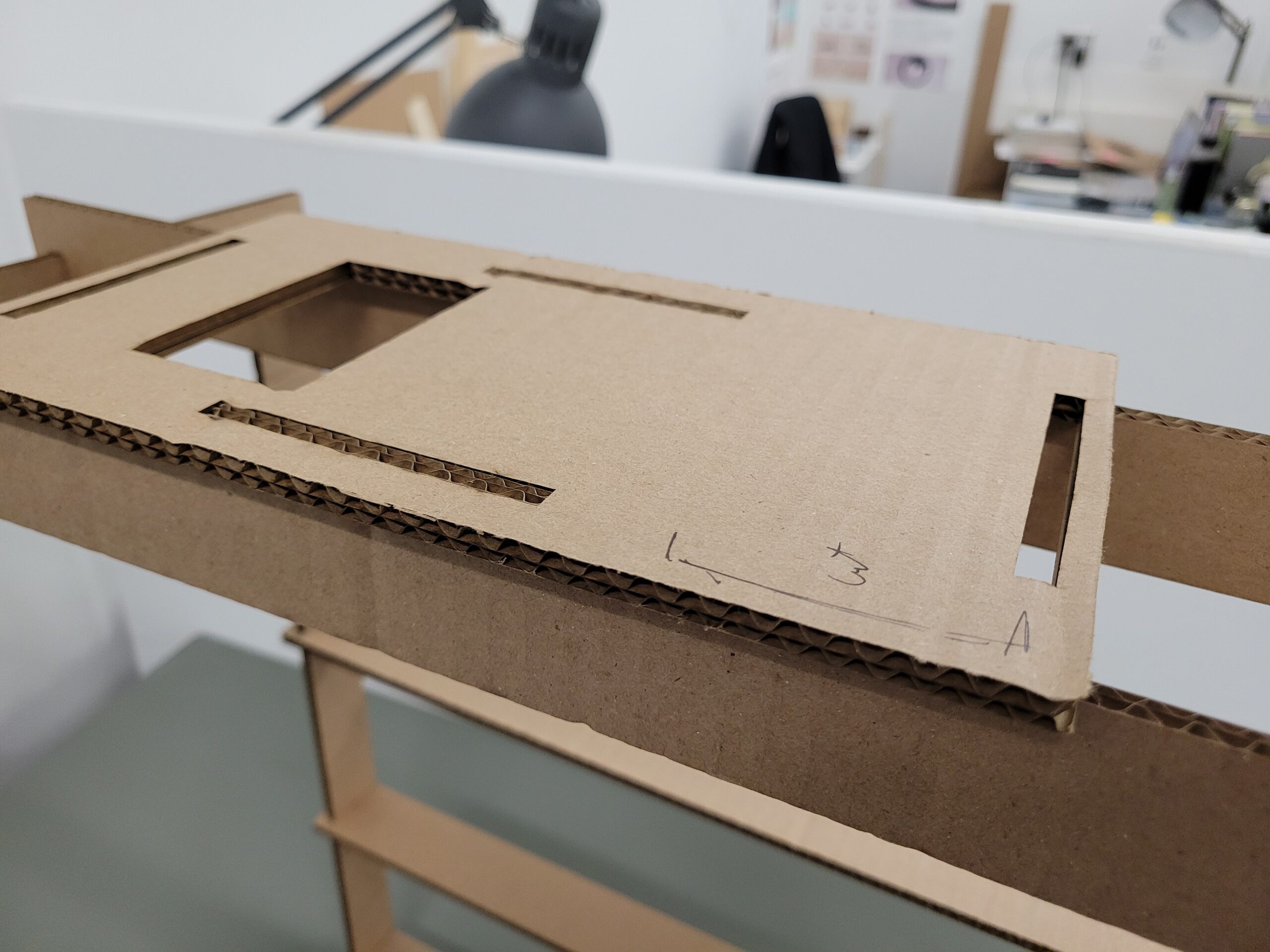
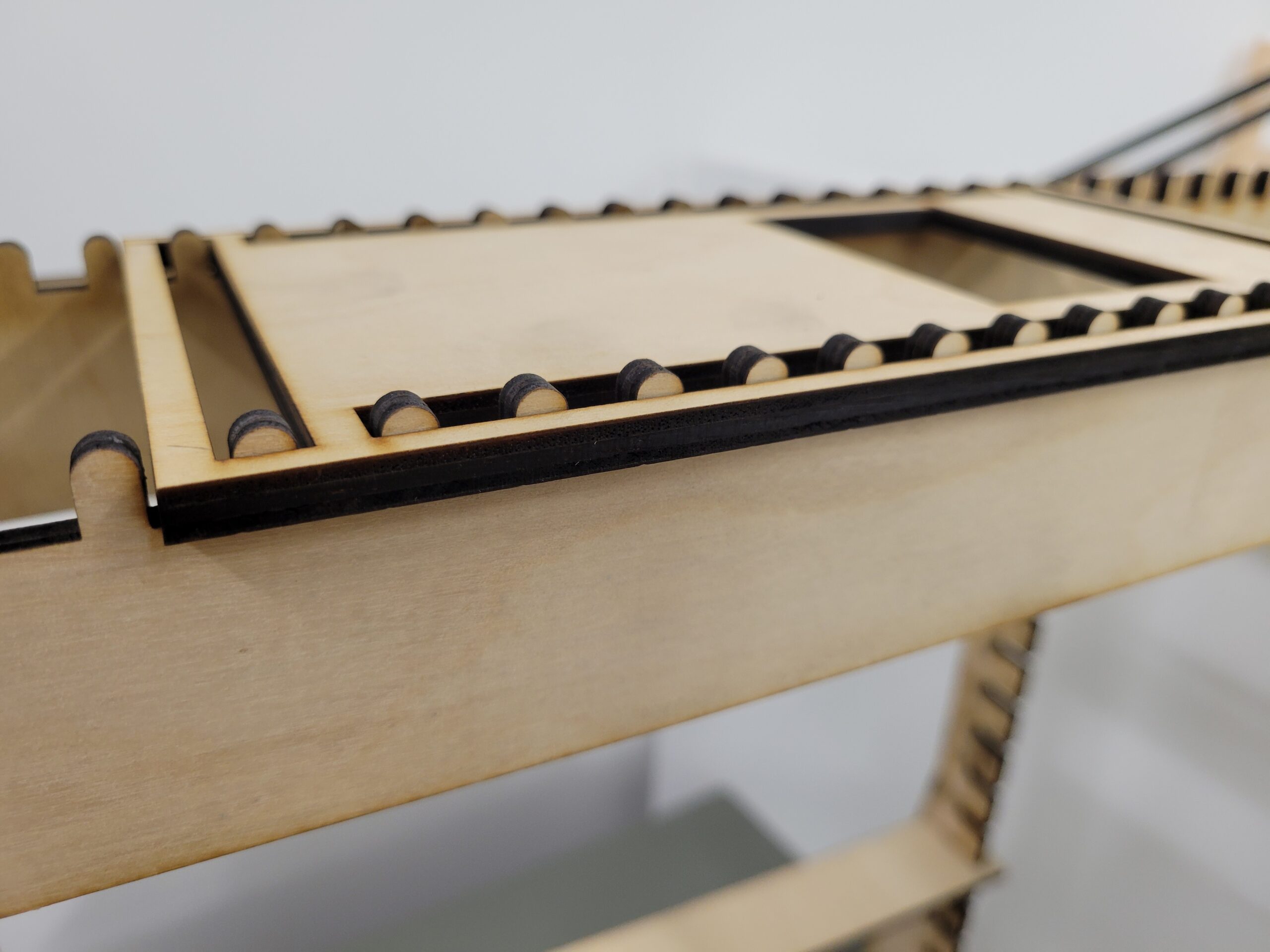
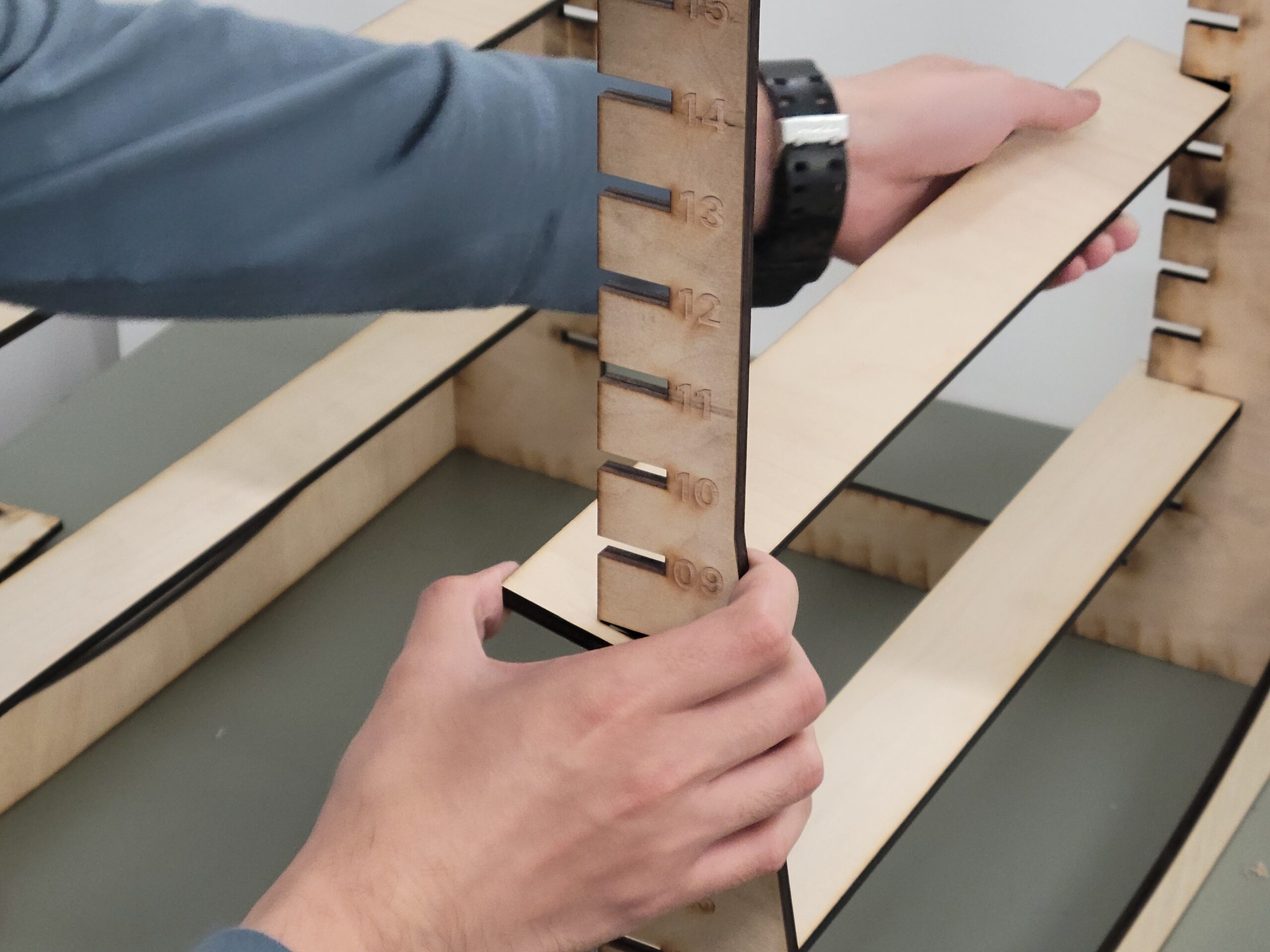
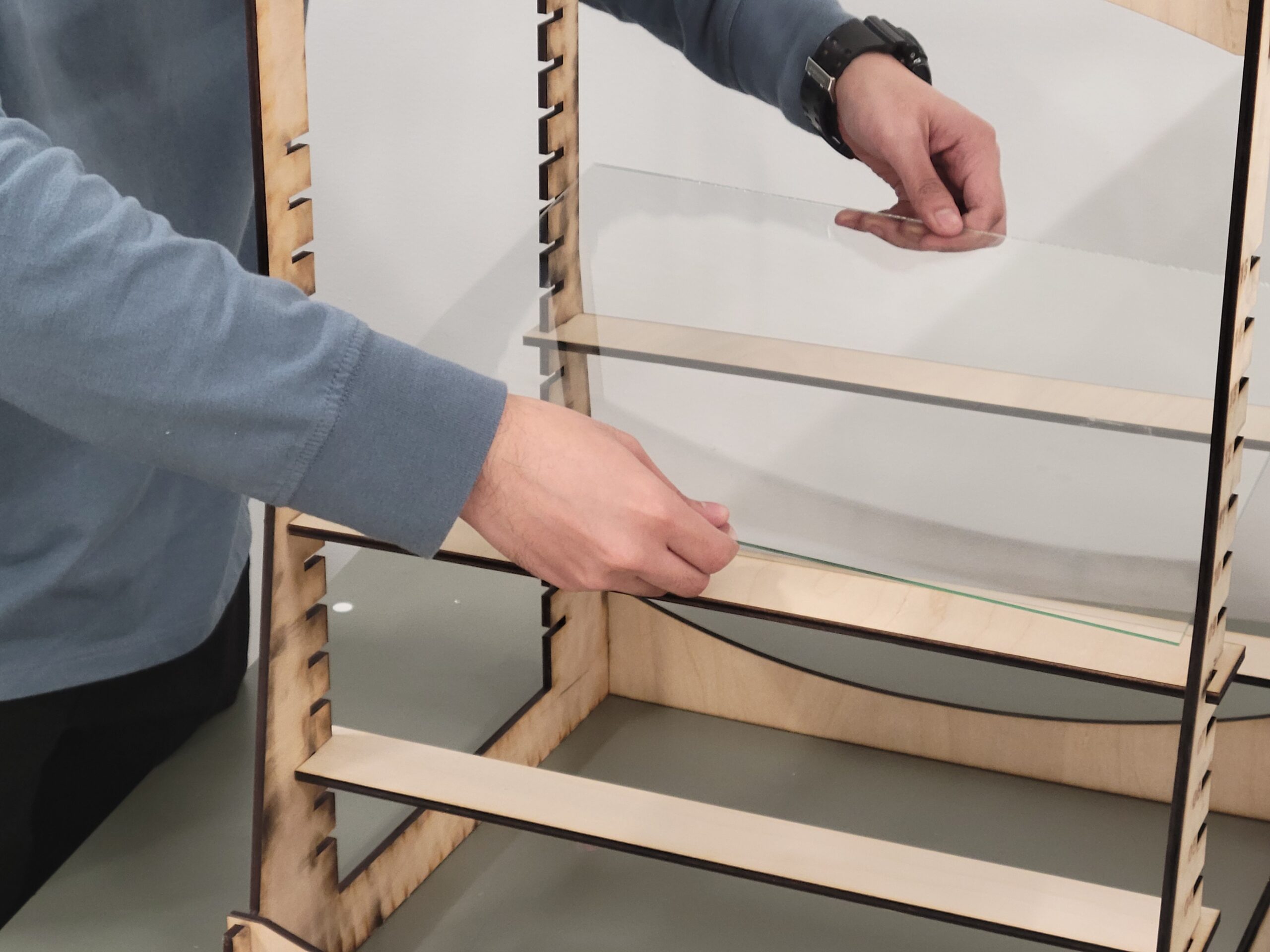
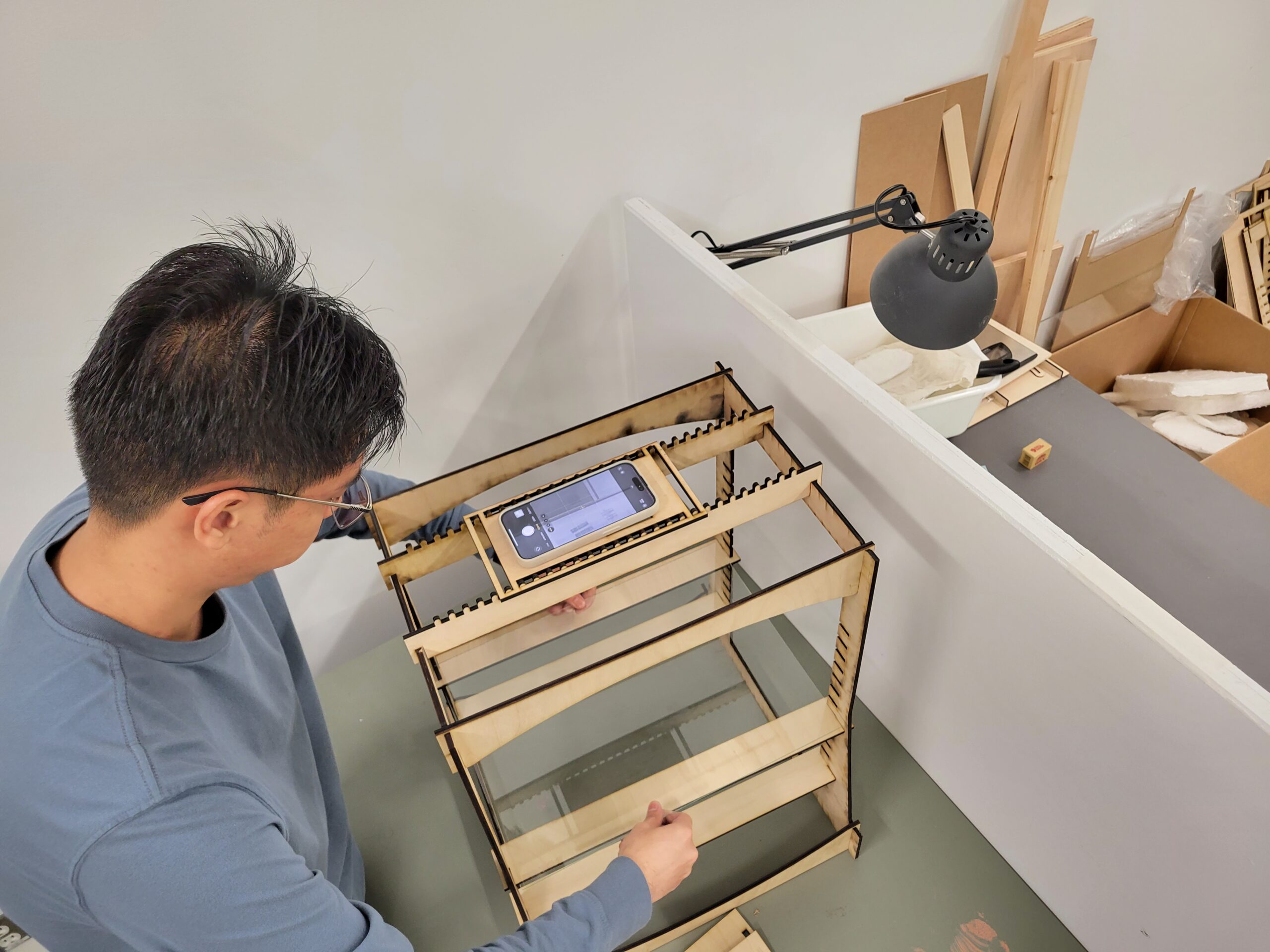
The main design challenges in between prototypes were addressing stability—a common trade-off for a sleek profile—and improving the loose tolerance of the joinery. To solve this, I added support braces to the top corners and created a wider, tapered base.
This stage also refined the stand's functionality:
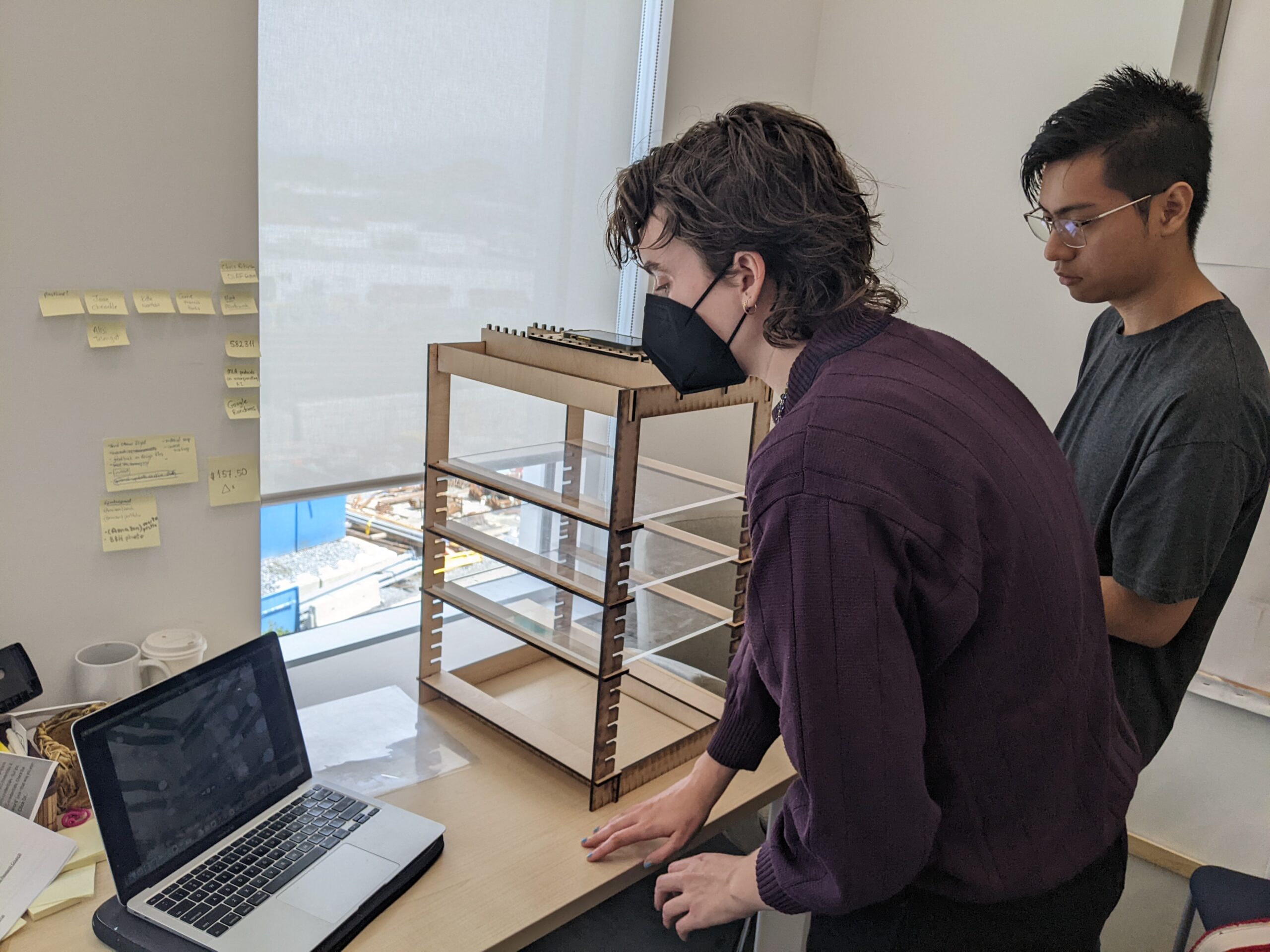
- Versatile Layering: A set of beams with fifteen numbered slots was added, allowing for precise and flexible height adjustments of the glass planes to ensure they remain level.
- Camera Flexibility: The phone holder was updated to support both portrait and landscape orientations.
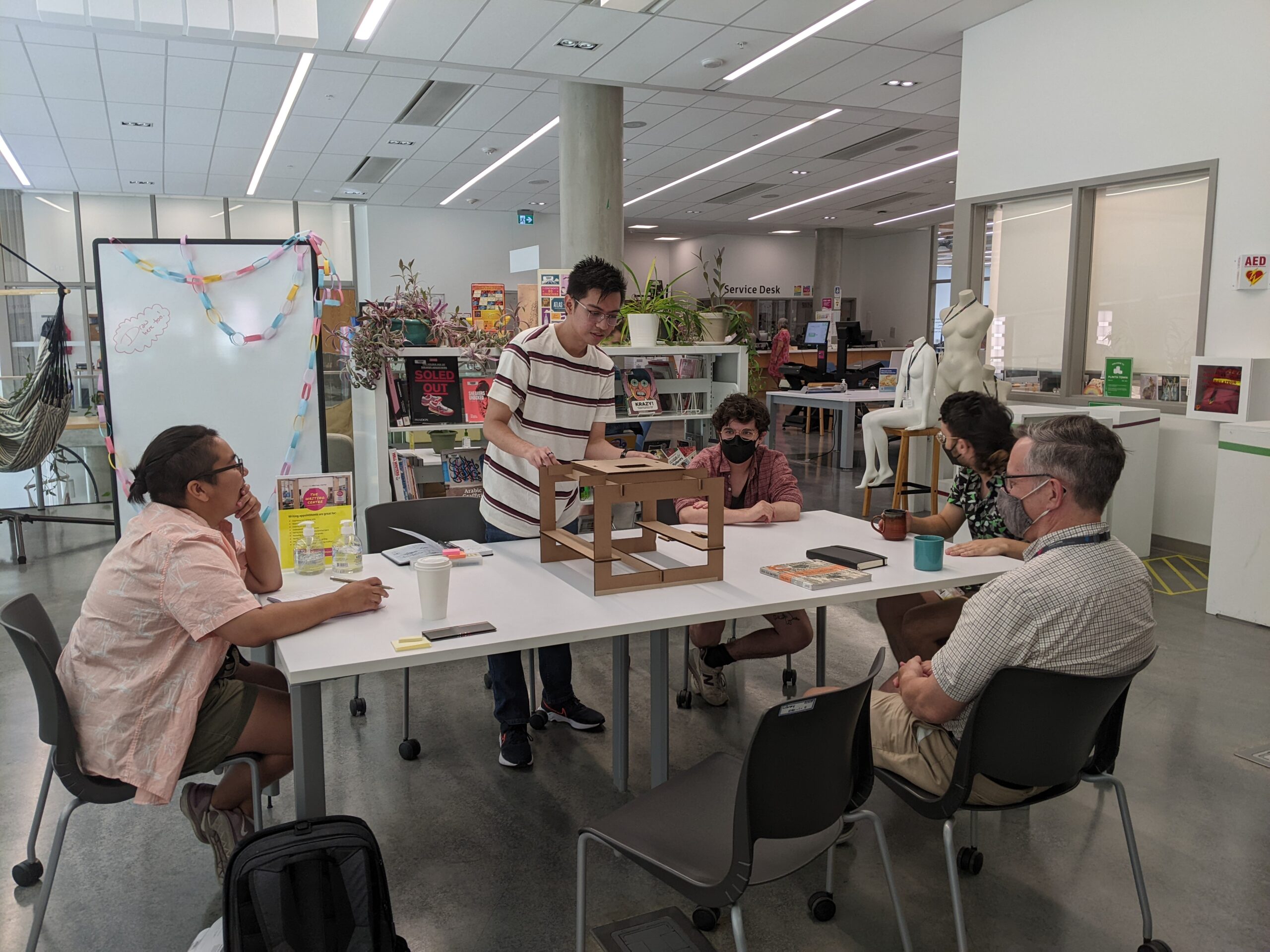
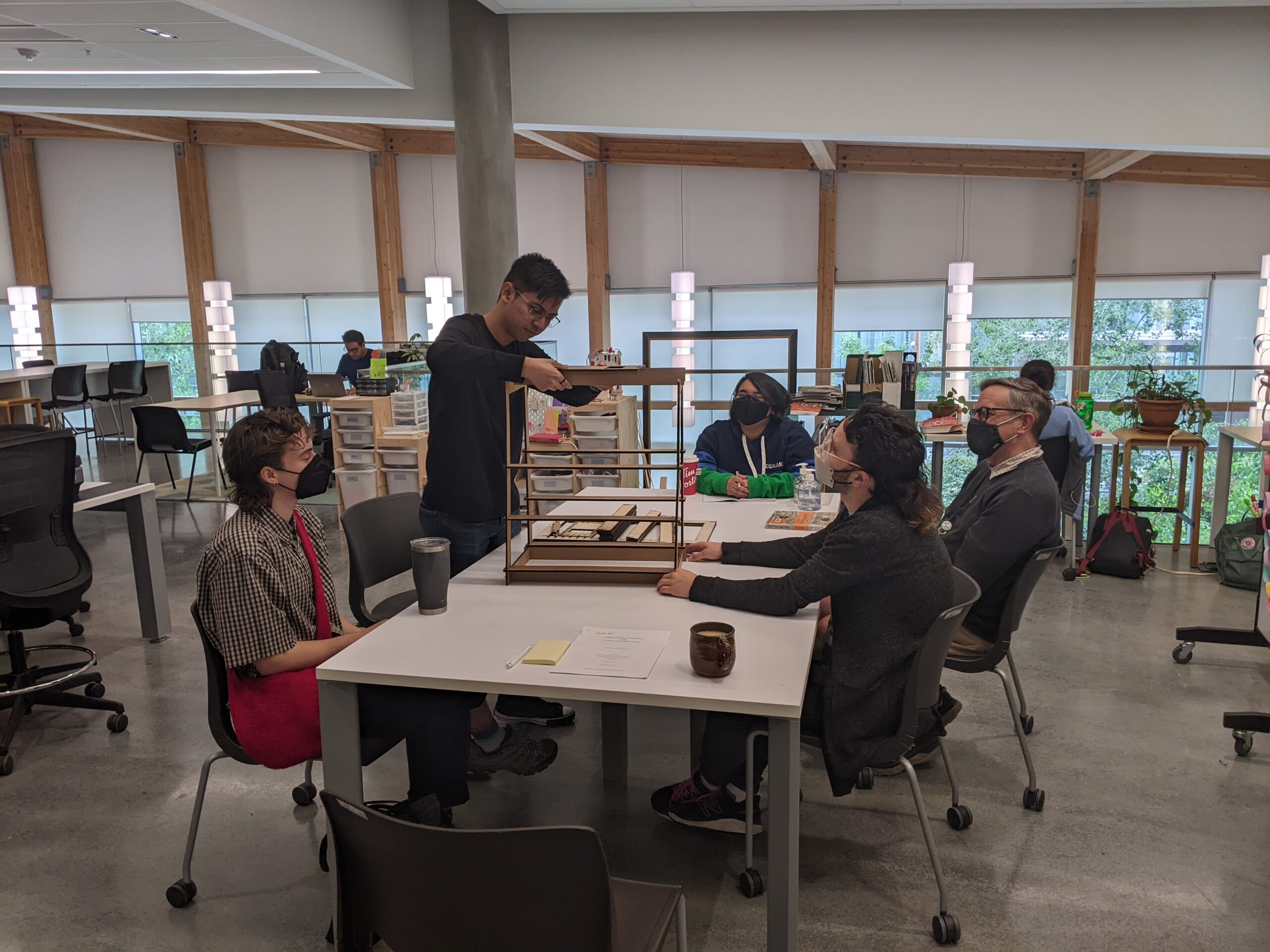
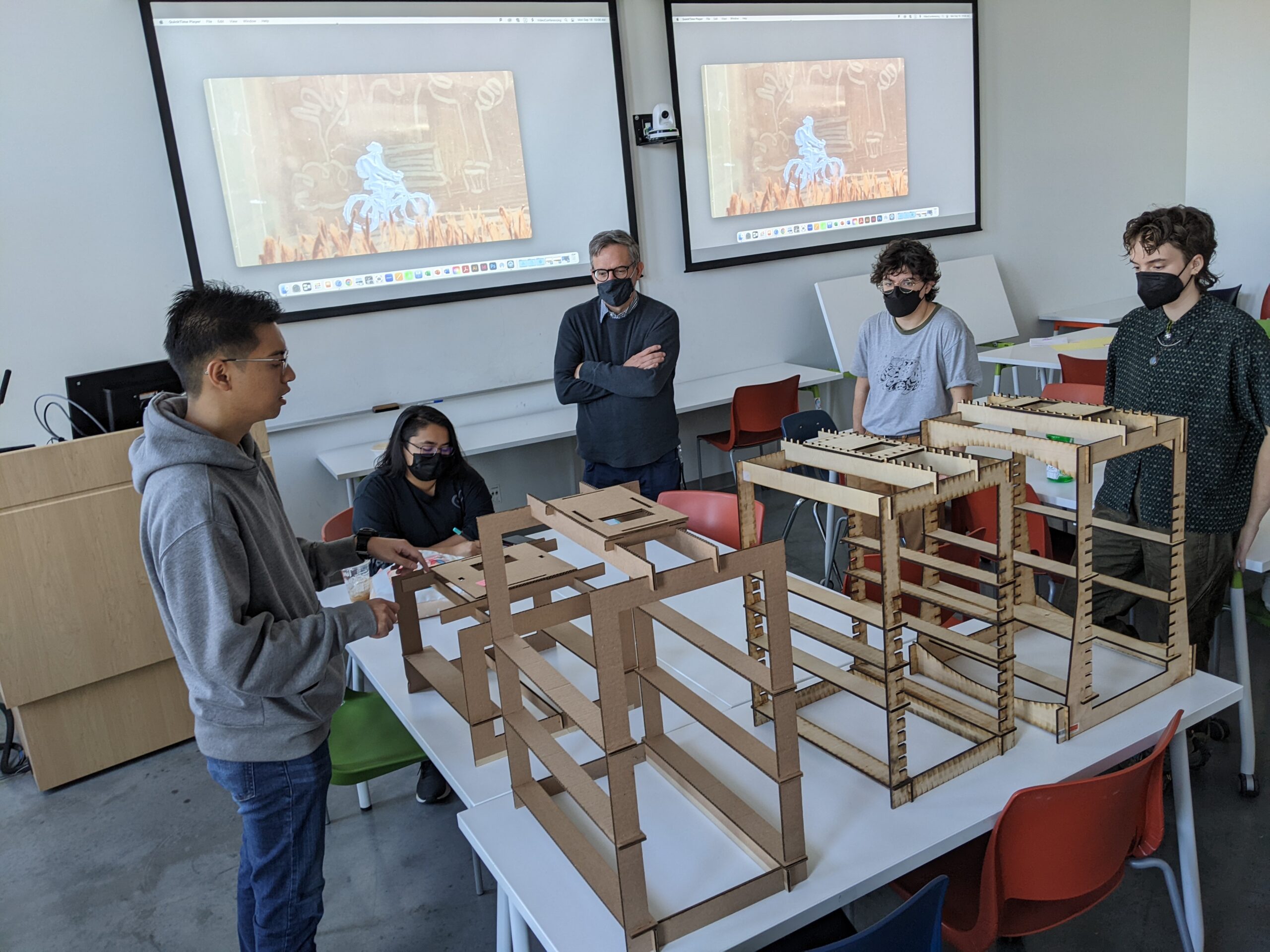
All iterations of the animation stand have gone through user testing by a research assistant and a consolidated review of animation educators and technicians.
Feedback on these initial designs led to three key modifications:
- Minimizing unnecessary parts to reduce bulk and simplify the stand.
- Adding the ability to readjust the glass planes for flexible shooting distances.
- Integrating a top layer capable of holding and flexibly adjusting a cellphone or lightweight camera.

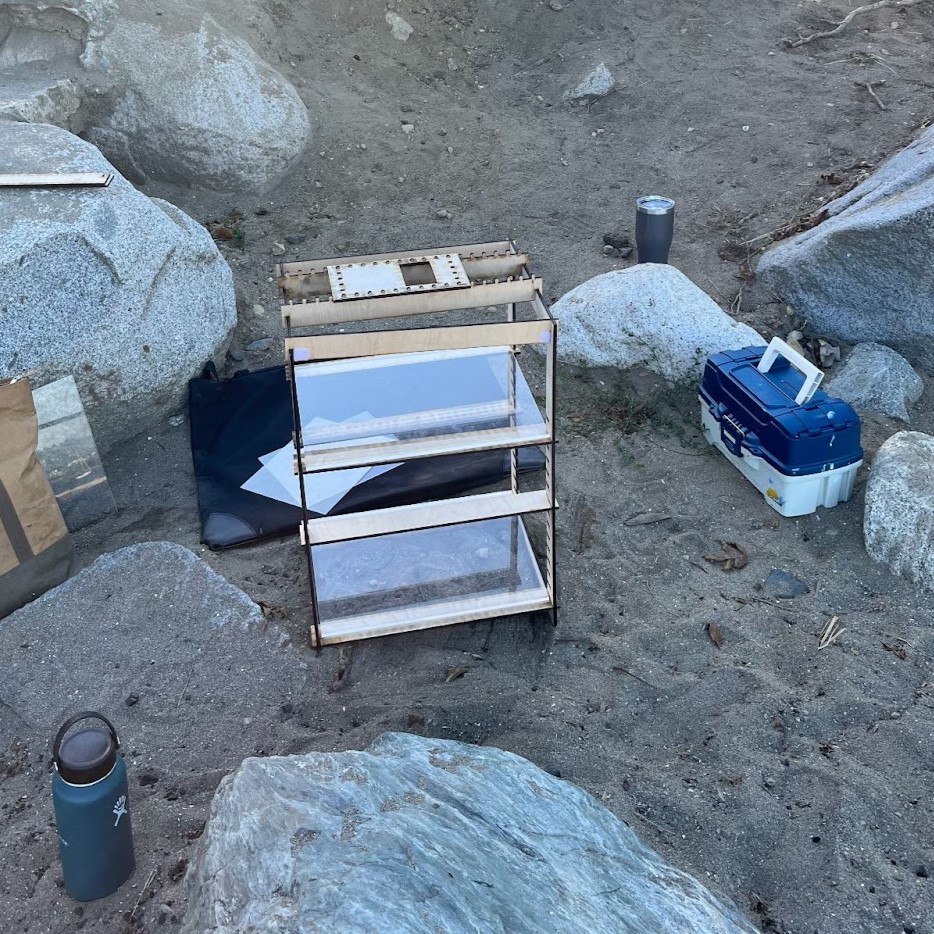
Outdoor testing at a beach by Emily Carr students through the Animate Materials Workshop.
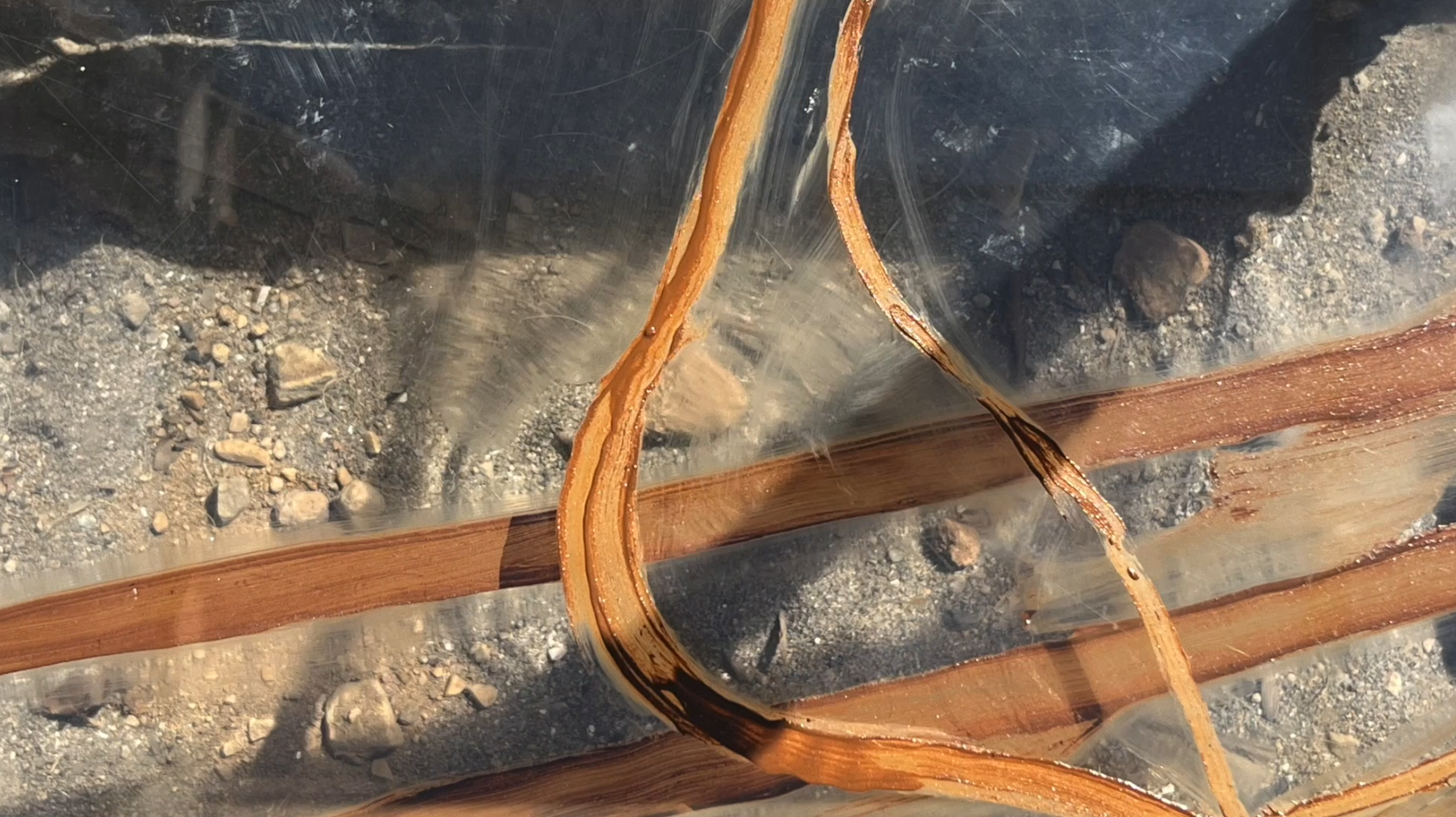
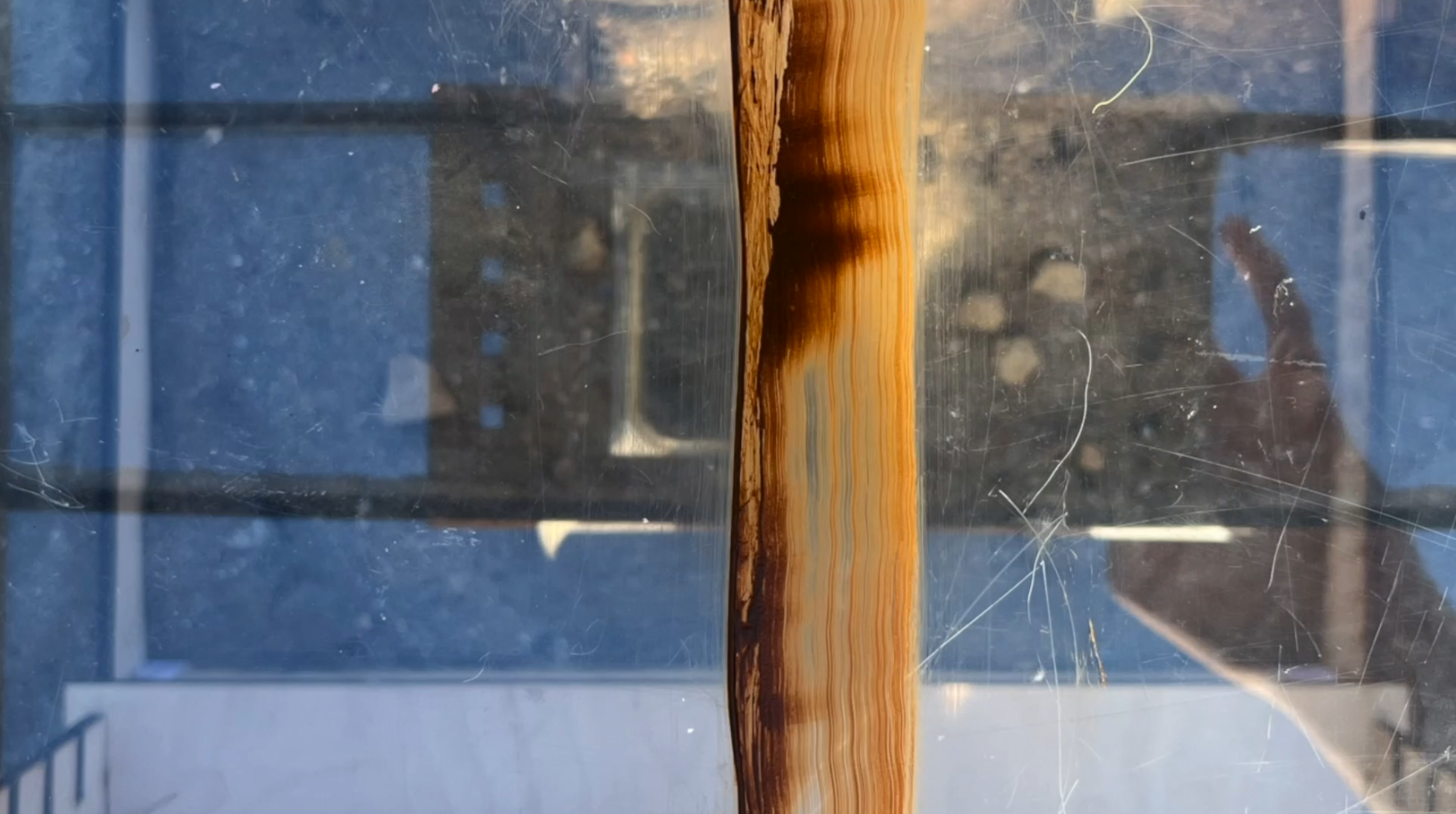
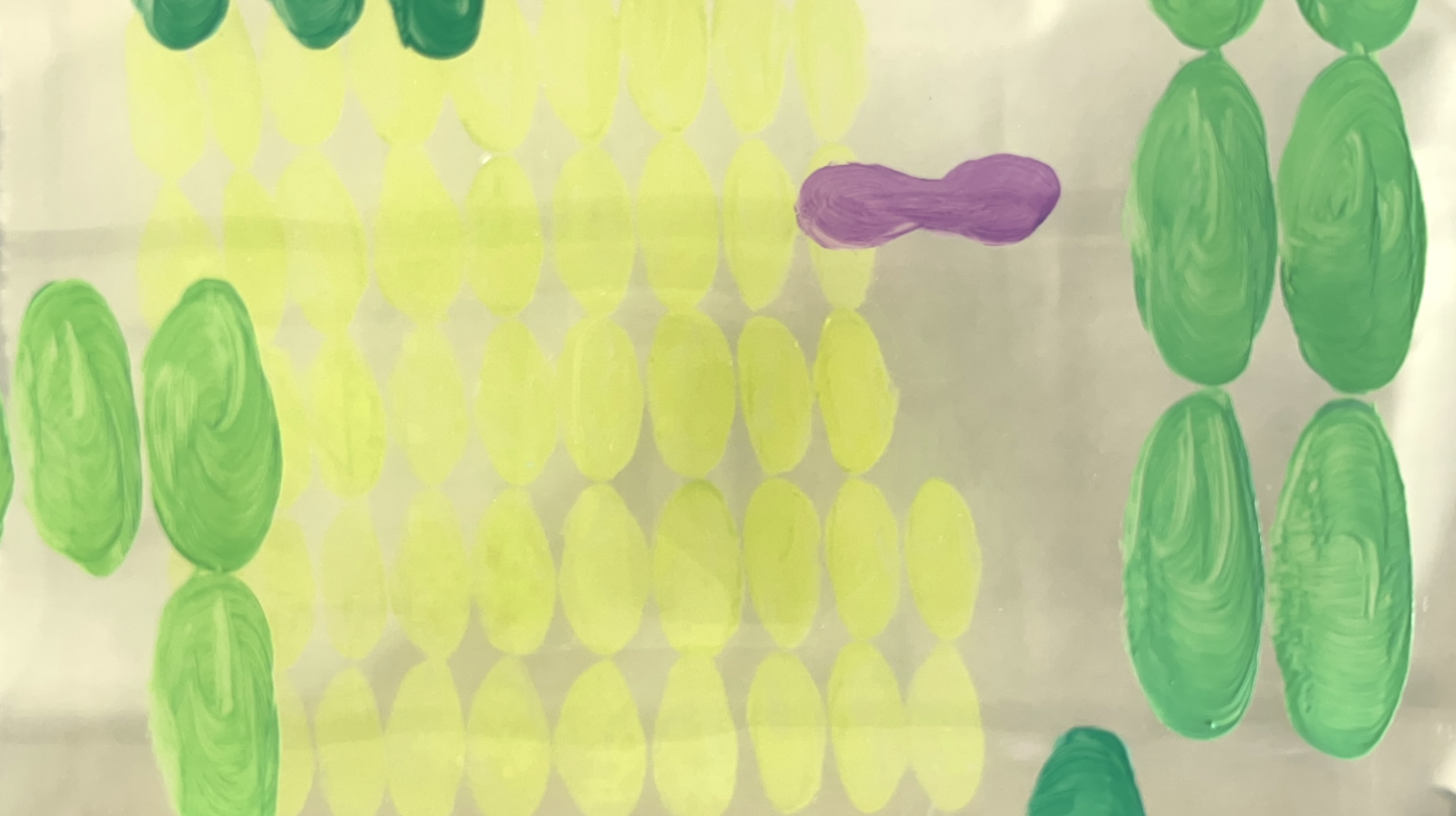
Stills from animation tests that used this multiplane set-up.
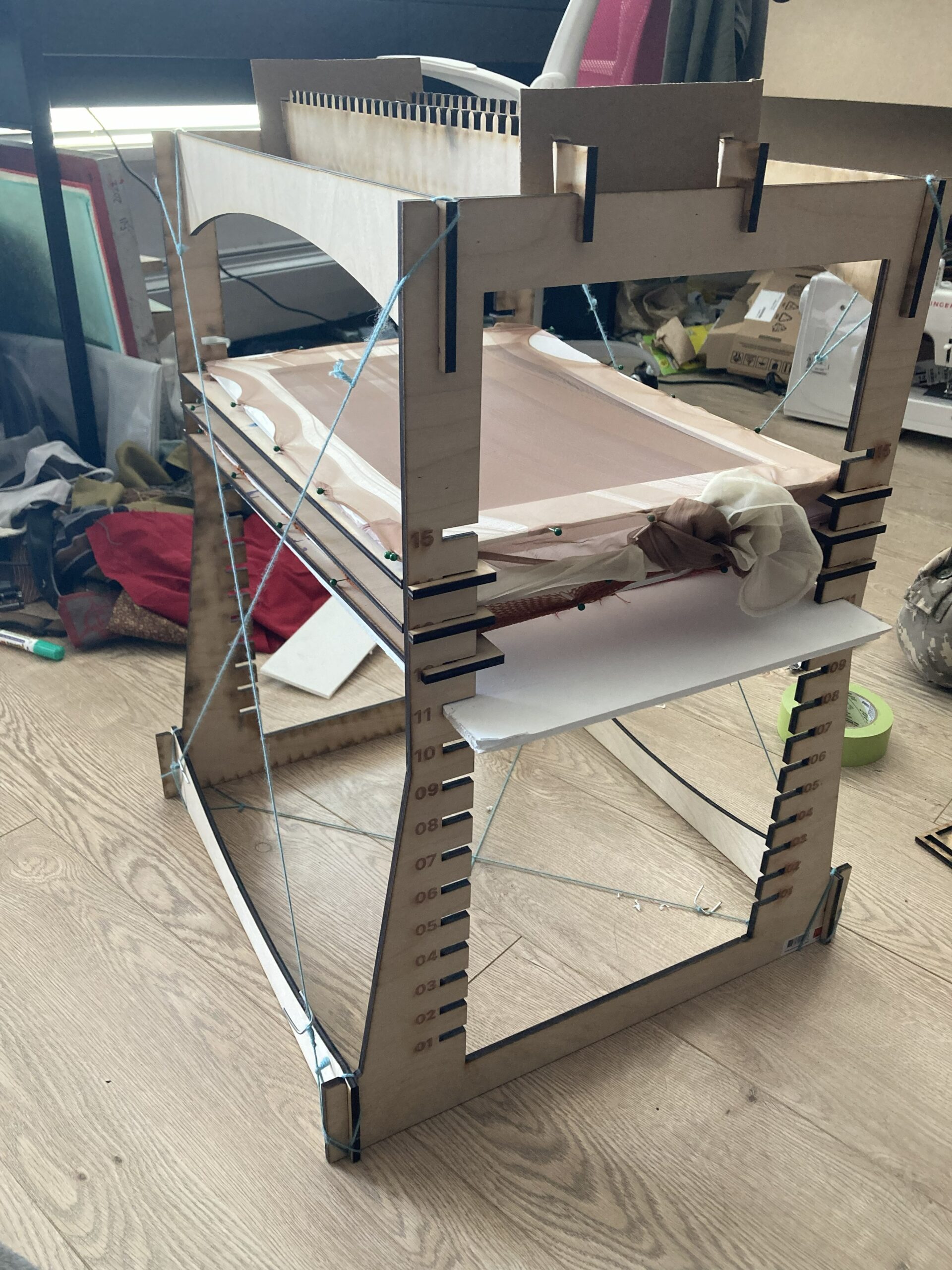
Image courtesy of Irina Warner from Barcelona.
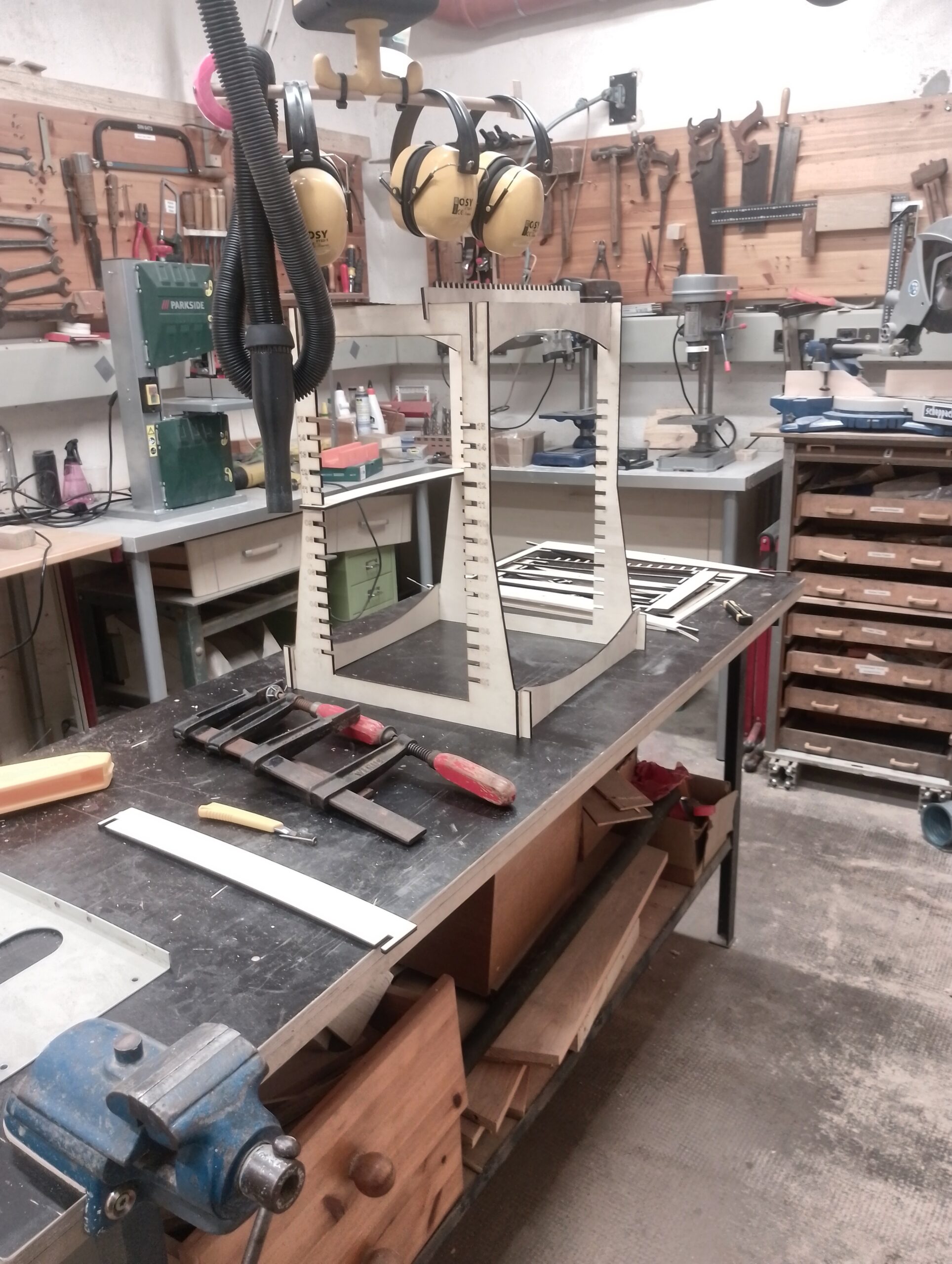
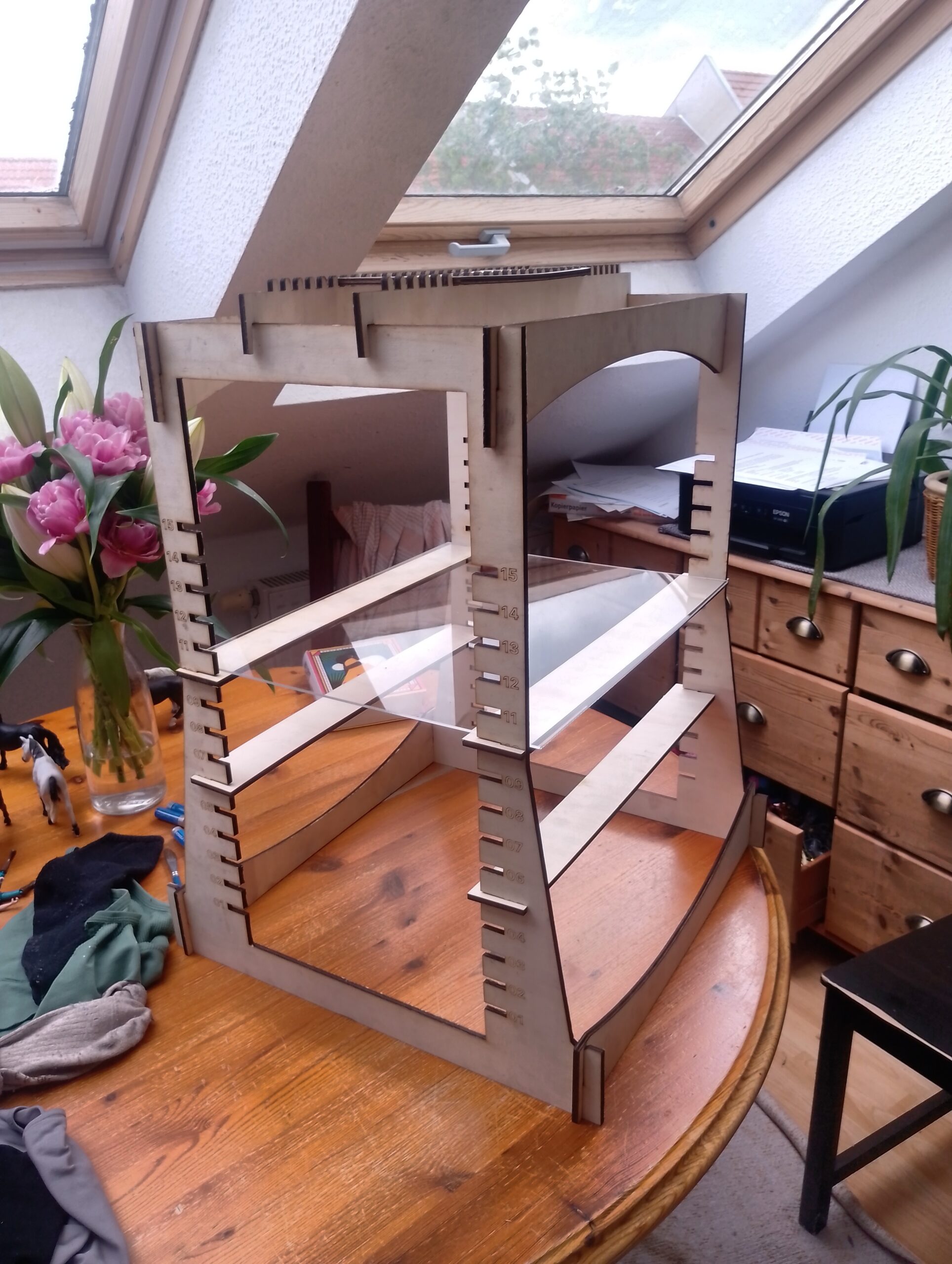
Images courtesy of Marcus Grysczok from Erfurt in preparation for a workshop in New Zealand.
Following the successful refinement process, four nimble multiplanes were produced for Emily Carr University, and the final design files were made open-access for public manufacturing.
To date, stands are being produced for educational workshops in Canada, Barcelona, and Germany.
Portable Multiplane Stand Vector File
A set of laser-cutting files for easy fabrication
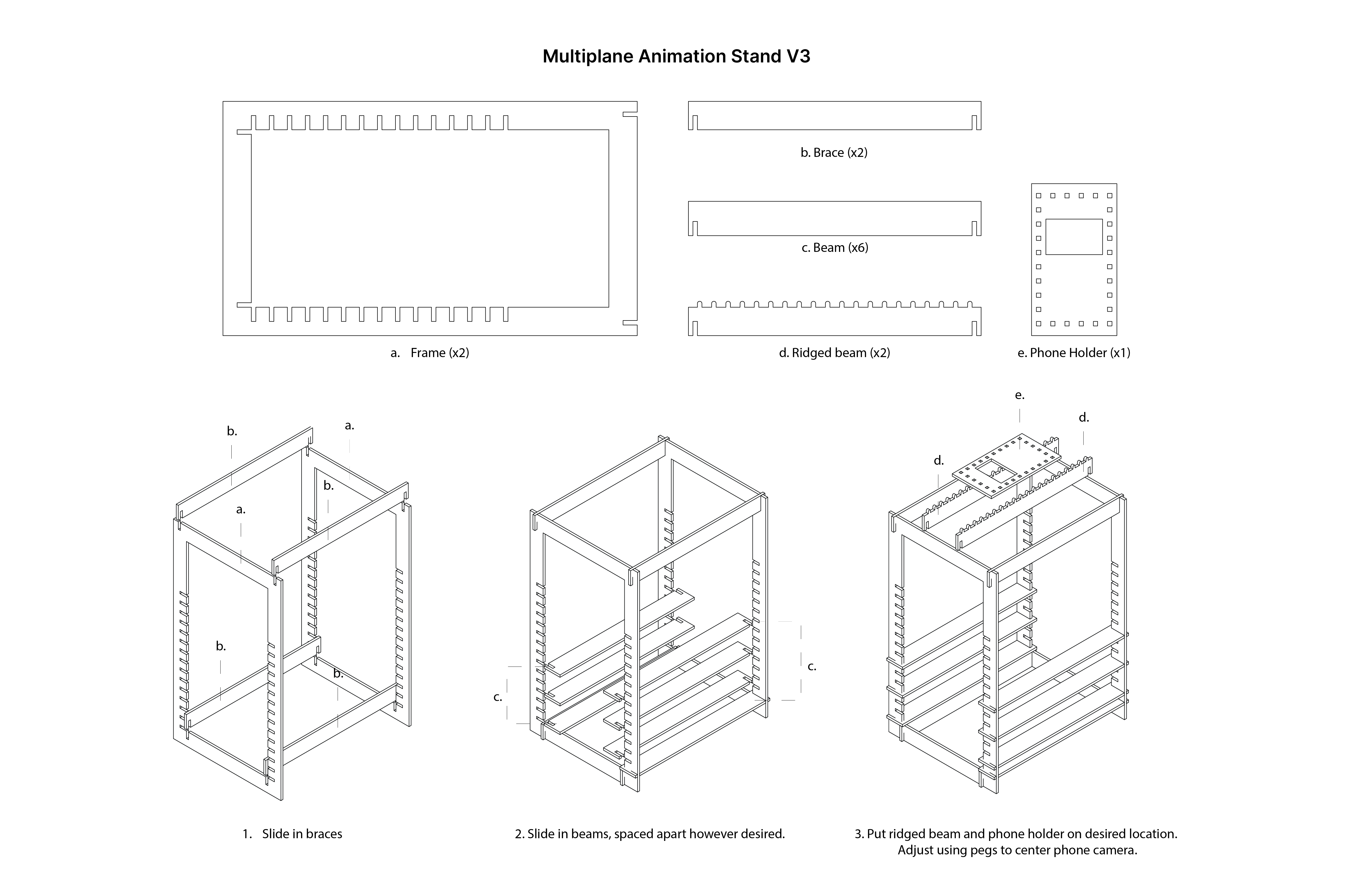
Assembly Instructions
One page of easy-to-follow instructions to produce your own multiplane stand.
© 2026 Erik Asia. All rights reserved.
Vancouver, BC, Canada